Table of Contents
ToggleSpotting tiny bugs crawling across your favorite pothos or hovering around that fiddle leaf fig? You’re not alone. Indoor plants are magnets for pests, even when they never see the outdoors. The good news: most infestations are fixable with the right approach and a little persistence. This guide walks through why houseplants attract bugs in the first place, how to identify the most common culprits, and what you can do to eliminate them, without turning your living room into a hazmat zone.
Key Takeaways
- Overwatering and poor air circulation are the leading causes of bugs on indoor plants, so focus on proper drainage and spacing to prevent infestations.
- Identify common pests like fungus gnats, spider mites, and mealybugs early by checking leaf undersides and using yellow sticky traps.
- Start treatment with the least invasive methods: let soil dry out for fungus gnats, spray water on spider mites, and use rubbing alcohol for mealybugs.
- Always quarantine new plants for at least 14 days before adding them to your collection to avoid introducing hidden pests.
- Prevent future bug problems by maintaining consistent watering routines, improving air circulation, and monitoring plants weekly for early detection.
- Systemic insecticides work for stubborn infestations but should never be used on edible plants or where children and pets have access.
Why Indoor Plants Attract Bugs
Houseplants create mini-ecosystems indoors, and bugs follow the same rules they do outdoors: they go where there’s food, moisture, and shelter. Overwatering is the number one culprit. Soggy soil creates ideal breeding grounds for fungus gnats and root-dwelling pests. Even well-draining potting mix can stay too wet if drainage holes are blocked or watering schedules are too aggressive.
Poor air circulation makes the problem worse. Stagnant air around foliage creates humid microclimates, perfect for spider mites and aphids. Crowding plants too close together or placing them in corners with no airflow sets the stage for an infestation.
New plants can introduce hitchhikers. That gorgeous monstera from the nursery may come with a free side of mealybugs. Always quarantine new arrivals for at least two weeks in a separate room before introducing them to your established collection. Check under leaves, along stems, and in leaf axils (where the leaf meets the stem) for early signs of trouble.
Organic matter in soil also attracts pests. Uncomposted materials, coffee grounds, or banana peels mixed into potting soil can draw fungus gnats and other decomposers. Stick with sterile, well-draining potting mix for indoor use. Save the composting for outdoor beds.
Stressed plants are easier targets. Nutrient deficiencies, inconsistent watering, or insufficient light weaken a plant’s natural defenses. Many varieties of indoor tropical house plants are particularly vulnerable when conditions drift from their native humidity and light levels. Healthy plants aren’t immune, but they’re far more resilient to pest pressure.
The Most Common Indoor Plant Pests and How to Identify Them
Fungus Gnats
These tiny black flies hover around the soil surface and are more annoying than destructive, until their larvae start munching on roots. Adult fungus gnats are about 1/8 inch long with long legs and delicate wings. They’re weak fliers, so you’ll often see them crawling on the soil or container rim.
The larvae live in the top 1-2 inches of moist soil, feeding on organic matter and fine root hairs. Light infestations rarely harm established plants, but seedlings and propagations can suffer. You’ll know you have them when clouds of gnats take off every time you water.
Yellow sticky traps catch the adults and help you gauge population size. Check trap counts weekly. If you’re catching more than a handful, it’s time to address soil moisture and consider a soil drench treatment.
Spider Mites
These microscopic arachnids (not insects) are nearly invisible to the naked eye but leave telltale damage. Look for fine webbing on leaf undersides, between stems, or at growth tips. Infested leaves develop a stippled, dusty appearance as mites pierce cells and suck out contents.
Hold a white paper under a leaf and tap the stem sharply. Tiny specks that crawl across the paper are mites. They thrive in dry, warm conditions, exactly what most homes offer in winter when heating systems run. Persistent problems with ivy house plants often trace back to spider mites exploiting low humidity.
Severe infestations cause yellowing, leaf drop, and stunted growth. Spider mites reproduce rapidly (a new generation every 5-7 days in warm conditions), so early detection matters. Increase humidity and inspect plants weekly during heating season.
Aphids and Mealybugs
Aphids are soft-bodied, pear-shaped insects about 1/8 inch long. They cluster on new growth, buds, and leaf undersides, sucking sap and secreting sticky honeydew that attracts sooty mold. Colors range from green to black, yellow, or even pink, depending on species.
Mealybugs look like tiny cotton balls tucked into leaf axils, along stems, or on the undersides of leaves. They’re covered in a white, waxy coating that repels water and many pesticides. Both pests weaken plants, distort new growth, and spread plant viruses.
Check new growth tips and the undersides of leaves regularly. A magnifying glass helps with early detection. According to House Plant Journal’s pest guide, catching aphids and mealybugs early, before populations explode, is key to managing them without resorting to aggressive treatments. Honeydew deposits often appear before you spot the bugs themselves: it feels sticky and attracts ants (even indoors, if you have any foraging through).
Natural and Chemical Solutions to Eliminate Indoor Plant Bugs
Start with the least invasive approach and escalate only if needed. For fungus gnats, let the soil dry out between waterings. The top 2 inches should feel completely dry before you water again. This breaks the larvae’s life cycle. A layer of 1/2 inch of horticultural sand or fine gravel on the soil surface prevents adults from laying eggs.
Beneficial nematodes (Steinernema feltiae) are a biological control option. Mix with water and drench the soil: nematodes hunt gnat larvae. Reapply every 2-3 weeks during active infestations. Yellow sticky traps reduce adult populations but won’t solve the root cause.
For spider mites, start with a strong spray of water. Take the plant to a sink or shower and blast the undersides of leaves to dislodge mites and webbing. Repeat every 3-4 days for two weeks. Boost humidity with a pebble tray or humidifier, mites hate moisture.
Insecticidal soap or neem oil sprays work on contact. Mix according to label directions (typically 2-5 tablespoons per gallon of water for neem oil concentrate). Spray thoroughly, covering all leaf surfaces, especially undersides. Reapply every 5-7 days for three treatments. Wear gloves and work in a well-ventilated area. Neem oil can leave a residue, so wipe leaves gently with a damp cloth a day after treatment.
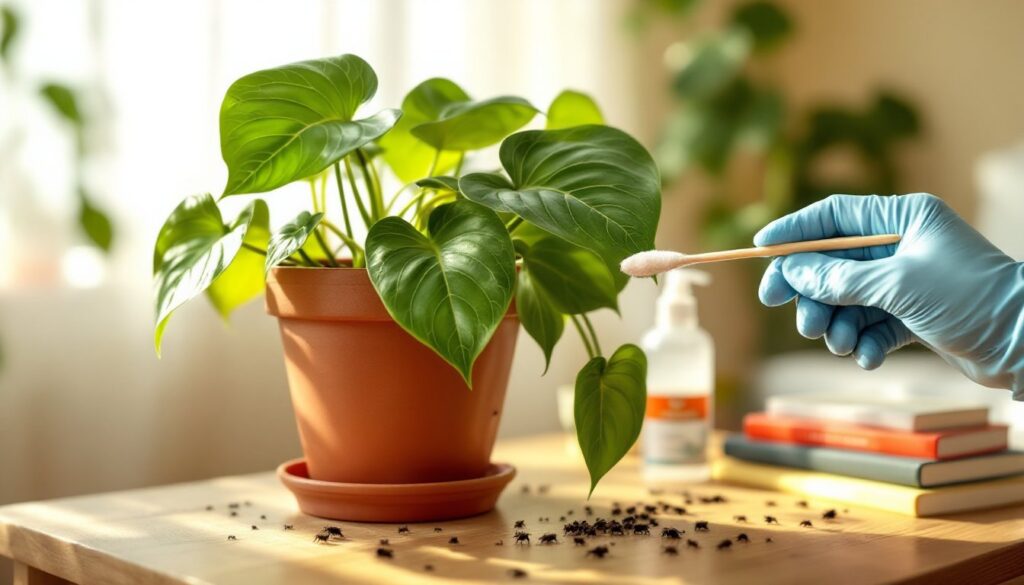
Aphids and mealybugs respond well to rubbing alcohol. Dip a cotton swab in 70% isopropyl alcohol and dab individual mealybugs or aphid clusters. The alcohol dissolves their waxy coating. For larger infestations, mix 1 part alcohol to 3 parts water in a spray bottle and apply weekly.
Insecticidal soap also works on soft-bodied pests. Apply thoroughly and repeat every 7 days for at least three weeks to catch newly hatched nymphs. For stubborn mealybug infestations, especially on thick-leaved succulents or unique house plants with intricate foliage, a systemic insecticide may be necessary.
Systemic insecticides (like imidacloprid granules) are absorbed by roots and make the entire plant toxic to sap-sucking pests. Follow label rates carefully, typically 1 teaspoon per 6-inch pot. Results take 1-2 weeks as the chemical moves through the plant’s vascular system. Systemics last 6-8 weeks and work well for hard-to-reach pests, but keep treated plants away from children and pets. Never use systemics on edible plants.
Safety first: Always wear gloves and eye protection when handling pesticides. Work outdoors or in a garage when possible. Read the entire product label before mixing or applying. Many houseplant species are sensitive to oils or soaps: test a small area and wait 24 hours before treating the whole plant.
Preventing Future Infestations
Prevention beats treatment every time. Start with a solid watering routine: only water when the top 1-2 inches of soil are dry. Use pots with drainage holes and empty saucers 15 minutes after watering so roots don’t sit in standing water. Plants suited for low-light conditions generally need less frequent watering than sun-loving varieties, adjust schedules accordingly.
Improve air circulation with a small fan on low speed. Moving air discourages fungal issues and makes life harder for spider mites. Don’t cram plants together. Leave a few inches of space between pots so air can flow around foliage.
Quarantine all new plants for 14 days minimum. Inspect thoroughly before introducing them to your collection. Even budget-friendly options from big-box stores can harbor pests in seemingly clean soil. Repot new arrivals into fresh, sterile potting mix if you have any concerns.
Clean leaves regularly. Dust and grime block light and create hiding spots for pests. Wipe smooth leaves with a damp cloth every few weeks. For flowering varieties or delicate foliage, a gentle rinse in the sink works well. Regular handling also helps you spot problems early.
Monitor plants weekly. Flip a few leaves, check growth tips, and run your fingers along stems. Catching an infestation at 5-10 bugs is infinitely easier than tackling hundreds. Keep a small magnifying glass and a flashlight handy for inspections.
Rotate plants occasionally to ensure even light exposure and discourage pests from settling in shadowed areas. For trailing or climbing species like house vine plants, inspect along the entire length of vines, not just near the pot.
Don’t over-fertilize. Excess nitrogen promotes soft, lush growth that aphids love. Follow label rates and fertilize only during active growth periods, typically spring through early fall. A balanced, water-soluble fertilizer at half strength every 4-6 weeks is plenty for most houseplants.
Bugs on indoor plants aren’t a death sentence. With consistent monitoring, quick action, and a few adjustments to care routines, most infestations clear up in a matter of weeks. The key is staying ahead of the problem before it gets out of hand.