Table of Contents
ToggleNot every room in your home gets bathed in sunlight, and that’s fine. North-facing rooms, hallways, bathrooms, and corners far from windows can still host thriving greenery if you choose the right plants. Shade-tolerant indoor plants aren’t just survivors: many are stunning, low-maintenance options that actually prefer dimmer conditions. Whether you’re working with a basement office or a windowless powder room, these plants will bring life to spaces that seem destined to stay bare. This guide covers the best shade indoor plants for 2026, how to keep them healthy, and the mistakes that trip up even experienced plant owners.
Key Takeaways
- Shade indoor plants are not just viable alternatives—they actively improve air quality by filtering VOCs, regulate humidity, and reduce stress in low-light spaces that would otherwise remain bare.
- Top shade-tolerant options like snake plants, pothos, philodendrons, and ZZ plants can thrive on as little as 25–50 foot-candles of light and require far less watering than sun-loving counterparts.
- Overwatering is the primary killer of shade plants; water only when the top 1–2 inches of soil are dry, use well-draining potting mix, and always ensure pots have drainage holes.
- Even low-light plants need some ambient light to survive—avoid pitch-black closets, and consider a full-spectrum LED grow light on a timer if natural light is truly absent.
- Regular leaf dusting, pot rotation every few weeks, and monitoring for pests like spider mites and fungus gnats are essential maintenance tasks that maximize photosynthesis and plant health in dimly lit rooms.
Why Shade-Tolerant Indoor Plants Are Essential for Every Home
Most homes have at least one room that doesn’t get direct sunlight. Maybe it’s a hallway with no windows, a bathroom with frosted glass, or a living room where tall buildings block the sun for most of the day. These spots often stay empty or get filled with fake plants because homeowners assume nothing real will grow there.
That assumption costs you. Indoor plants improve air quality by filtering out VOCs (volatile organic compounds) like formaldehyde and benzene, common in furniture, paint, and cleaning products. They also regulate humidity, which matters in dry climates or homes with forced-air heating. And there’s the psychological benefit: studies consistently show that indoor greenery reduces stress and boosts focus, even in rooms with minimal natural light.
Shade-tolerant plants evolved to thrive on the forest floor, where the canopy blocks most sunlight. They’ve adapted to low-light conditions by maximizing chlorophyll efficiency and slowing their growth rate. This makes them ideal for indoor environments where artificial light is the main source. Unlike sun-loving succulents or cacti, these plants won’t stretch, pale, or wither in dim corners. They’re built for it.
Choosing the right plant for a low-light space isn’t about settling for second-best. Many house plants that need little light are among the most visually striking and easiest to care for. You’re not compromising, you’re matching the plant to the conditions.
Top Shade Indoor Plants for Low-Light Rooms
Snake Plant: The Ultimate Low-Maintenance Shade Lover
Snake plant (Sansevieria trifasciata) is nearly impossible to kill. It tolerates low light, irregular watering, and a range of temperatures that would stress out most houseplants. The upright, sword-like leaves grow slowly and hold their shape without staking or pruning.
Snake plants can survive in rooms with as little as 50 foot-candles of light, about what you’d get from a desk lamp in a windowless office. They’re also one of the few plants that release oxygen at night, making them a smart choice for bedrooms. Water them every 2-3 weeks during the growing season, less in winter. Overwatering is the main way people kill these plants, so err on the dry side.
Use well-draining soil, cactus mix works well, and a pot with drainage holes. If the leaves start to yellow or feel mushy at the base, you’re watering too often. If they wrinkle or curl inward, it’s time for a drink. Snake plants are also tolerant of fluorescent lighting, so they’re ideal for office spaces or basements with no natural light at all.
Pothos and Philodendron: Trailing Beauty for Dark Corners
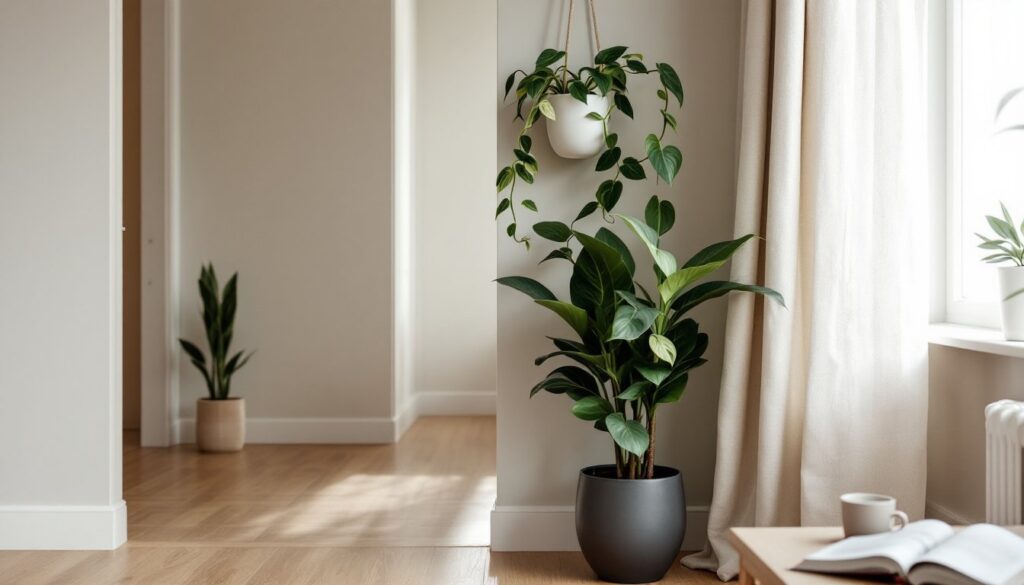
Pothos (Epipremnum aureum) and philodendron (Philodendron hederaceum) are often confused because they look similar and share care requirements. Both are trailing vines that thrive in low light and forgive a lot of neglect. They’re excellent for hanging baskets, shelves, or training up a moss pole.
These plants can handle light levels as low as 25-50 foot-candles, though they’ll grow faster and produce more variegation in brighter indirect light. In very dim conditions, new leaves may be smaller and solid green rather than variegated. That’s normal, it’s the plant adapting to maximize photosynthesis.
Water when the top 1-2 inches of soil feel dry. Both pothos and philodendron are sensitive to overwatering, which leads to root rot. Use a standard potting mix and a container with drainage. These plants are also easy to propagate: snip a stem just below a node, place it in water, and you’ll see roots in 7-10 days. Pothos and philodendron are mildly toxic to pets, so keep them out of reach if you have curious cats or dogs. Homeowners looking to add indoor tropical house plants to dim spaces often start with these two for good reason.
ZZ Plant and Cast Iron Plant: Nearly Indestructible Options
ZZ plant (Zamioculcas zamiifolia) and cast iron plant (Aspidistra elatior) are the workhorses of low-light gardening. Both have been used in commercial interiors for decades because they tolerate neglect, low humidity, poor air circulation, and minimal light.
The ZZ plant has thick, waxy leaves that store water, so it can go weeks without a drink. It grows from rhizomes, which also store moisture and nutrients. In low light, growth slows to a crawl, but the plant stays healthy. Water every 2-4 weeks, depending on humidity and temperature. Like snake plants, ZZ plants are more likely to suffer from overwatering than underwatering.
Cast iron plants are even tougher. They can survive in near-total darkness, though they’ll grow very slowly. The broad, dark green leaves are nearly black in low light. Water when the soil is dry to the touch, and don’t worry if you forget, cast iron plants can go a month or more without water. Both plants prefer moderate to low humidity and room temperatures between 60-75°F. They’re also resistant to pests, which is rare among houseplants. For a variety of unique house plants that tolerate shade, these two are top-tier choices.
How to Care for Shade Indoor Plants
Watering is the biggest variable. Shade plants grow slowly, so they use less water than sun-loving species. Overwatering causes root rot, which shows up as yellowing leaves, mushy stems, or a sour smell from the soil. Most shade-tolerant plants prefer to dry out slightly between waterings. Stick your finger 1-2 inches into the soil, if it’s dry, water. If it’s damp, wait.
Use room-temperature water, and water until it drains from the bottom of the pot. Discard any water that collects in the saucer after 15 minutes. Sitting in standing water is a fast track to root rot. In winter, reduce watering frequency, most houseplants enter a semi-dormant phase when daylight hours decrease.
Soil matters more than most DIYers realize. Shade plants need well-draining soil to prevent water from pooling around the roots. A standard potting mix works for most species, but adding perlite or coarse sand improves drainage. Avoid garden soil or topsoil, they’re too dense and compact in containers.
Light is relative. “Low light” doesn’t mean no light. It means the plant can survive in indirect light or ambient room light, but won’t thrive in a pitch-black closet. If you’re unsure, use a light meter or smartphone app to measure foot-candles. Most shade plants do well between 25-200 foot-candles. If natural light is truly absent, consider a full-spectrum LED grow light on a timer for 8-12 hours per day. Gardening experts recommend testing light levels before selecting plants to ensure compatibility.
Fertilizer should be used sparingly. Shade plants grow slowly, so they don’t need heavy feeding. Use a balanced liquid fertilizer diluted to half strength once every 4-6 weeks during spring and summer. Skip fertilizer in fall and winter. Over-fertilizing causes salt buildup in the soil, which burns roots and shows up as brown leaf tips.
Humidity isn’t usually critical for shade-tolerant species, but dry indoor air can cause leaf tips to brown. If your home’s humidity is below 40% year-round, consider grouping plants together or placing them on a tray filled with pebbles and water. The evaporating water raises local humidity without waterlogging the soil. Avoid misting, it doesn’t raise humidity long enough to matter and can promote fungal growth on leaves.
Repotting is infrequent. Most shade plants are slow growers and can stay in the same pot for 2-3 years. Signs that it’s time to repot include roots growing out of the drainage holes, water running straight through without soaking in, or the plant becoming top-heavy and tipping over. Move up to a pot 1-2 inches larger in diameter, and refresh the soil.
Common Mistakes to Avoid When Growing Plants in Shade
Overwatering is the number one killer. Because shade plants grow slowly, they use less water than their sun-loving counterparts. Many DIYers water on a fixed schedule, every Saturday, for example, without checking the soil. That’s a mistake. Water based on the plant’s needs, not the calendar.
Using pots without drainage holes is another common error. Decorative pots without drainage trap water at the bottom, even if you’re careful. Either drill a drainage hole (use a masonry bit for ceramic pots), or use the decorative pot as a cachepot and keep the plant in a plastic nursery pot that drains.
Assuming all low-light plants are the same leads to mismatched expectations. Some shade-tolerant plants, like peace lilies, prefer consistently moist soil. Others, like snake plants, want to dry out between waterings. Read the care requirements for each species instead of treating them all the same.
Ignoring pest problems because the plant is indoors is risky. Spider mites, mealybugs, and fungus gnats can infest shade plants, especially in low-airflow environments. Inspect leaves every few weeks, especially the undersides. If you spot pests, isolate the plant and treat it with insecticidal soap or neem oil. Fungus gnats are attracted to wet soil, so let the top layer dry out between waterings. For homeowners seeking floor house plants that make a statement, maintaining vigilance against pests is essential.
Placing plants in zero-light areas and expecting them to survive. Even the toughest shade plants need some light. A windowless bathroom with the door closed all day won’t work unless you install a grow light. If you can’t comfortably read a book in a space without turning on a light, your plant will struggle.
Skipping the acclimation period when moving a plant from a bright nursery to a dim room causes shock. Gradually reduce light exposure over 1-2 weeks to help the plant adjust. Otherwise, you may see leaf drop or yellowing as the plant struggles to adapt. Homeowners looking for house warming plants should consider acclimation when selecting gifts for friends.
Forgetting to dust leaves seems minor, but dust blocks light absorption. Wipe leaves with a damp cloth every few weeks to keep them clean and maximize photosynthesis. This is especially important for plants in low-light conditions, where every bit of light counts.
Not rotating the pot leads to lopsided growth. Plants grow toward the light source, so turn the pot a quarter turn every few weeks to encourage even growth. This is particularly important for cheapest house plants like pothos and philodendron that grow quickly and can become unbalanced. For additional tips on maintaining healthy indoor greenery, home improvement resources offer comprehensive guides. Regional variations in climate and interior design trends are also covered by lifestyle publications focused on western living.