Table of Contents
ToggleMost houseplants offer greenery, but blooming varieties deliver something more: color, fragrance, and the satisfaction of coaxing flowers out of a pot. They’re not just decoration, they’re proof you’ve dialed in the care. Whether someone’s working with a sun-drenched south window or a dim corner, there’s a flowering plant that’ll perform. This guide cuts through the guesswork, covering which bloomers thrive indoors, what they need to flower reliably, and how to troubleshoot when buds drop or blooms refuse to show.
Key Takeaways
- Blooming indoor plants offer more than decoration—they provide color, fragrance, and proof of proper care while filtering air and signaling plant health.
- Beginners should start with low-maintenance bloomers like peace lilies or kalanchoes, which tolerate typical indoor conditions and forgive minor care lapses.
- Light is the most critical factor for flowering success; most bloomers need bright indirect light (200–400 foot-candles), and insufficient light is the primary reason plants fail to flower indoors.
- Fertilize blooming plants every two weeks with a phosphorus-rich formula (10-30-10 ratio) during active growth, as flowering varieties deplete nutrients faster than foliage-only plants.
- Maintain 40–60% humidity, avoid temperature swings below 50°F or near heating vents, and deadhead spent blooms to extend flowering cycles and redirect energy to new buds.
- Bud drop and poor blooming typically stem from temperature fluctuations, low humidity, or inconsistent watering—moving plants to stable locations and using pebble trays dramatically improves results.
Why Choose Flowering Houseplants for Your Indoor Space
Flowering houseplants bring functional beauty to a room. Unlike cut flowers that wilt in a week, a well-cared-for blooming plant can cycle flowers for months or even year-round with the right conditions.
Beyond aesthetics, many bloomers are air-purifying workhorses. Peace lilies, for example, filter formaldehyde and benzene while producing white spathes. Blooms also signal plant health, when a plant flowers, it’s usually getting the light, water, and nutrients it needs.
For DIYers tackling room refreshes, flowering plants add seasonal interest without the commitment of paint or wallpaper. Swap in a blooming kalanchoe in winter, rotate to a jasmine in spring, and the space feels updated without lifting a hammer.
One practical advantage: flowering plants often force better care habits. Dead-heading spent blooms, adjusting light exposure, and monitoring humidity become routine. That attention translates to healthier plants overall and fewer trips to the garden center for replacements.
Best Blooming Indoor Plants for Beginners
Not all flowering plants demand greenhouse conditions. These selections tolerate typical indoor environments and forgive minor care lapses.
Low-Light Flowering Options
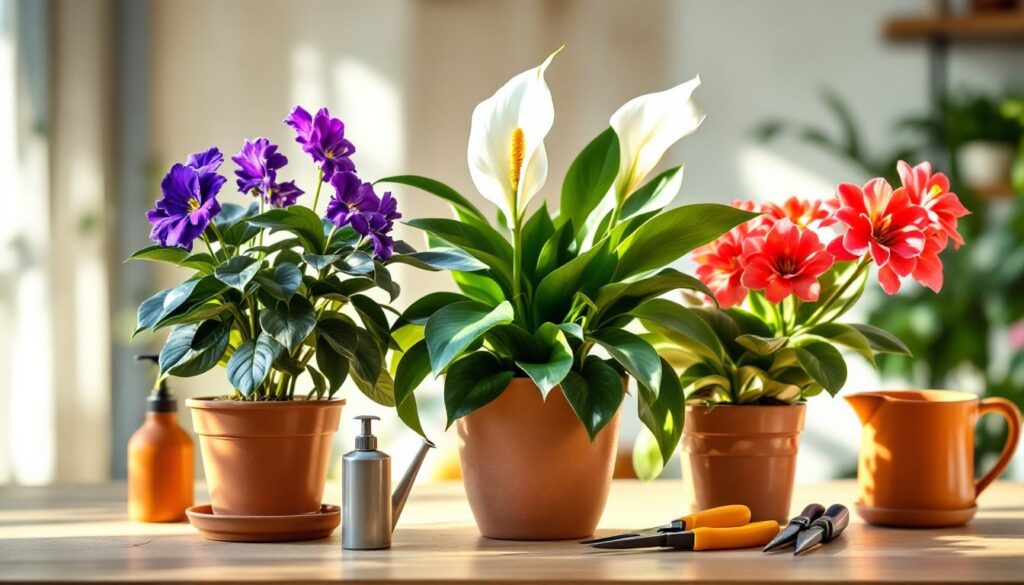
Peace lily (Spathiphyllum) tops the beginner list. It thrives in low to medium indirect light, think north-facing windows or rooms with fluorescent fixtures. The white blooms (technically modified leaves called spathes) appear reliably when the plant’s slightly root-bound. Water when the top inch of soil dries: peace lilies will visibly droop when thirsty, then perk up within hours of watering. They’re listed among common flowering house plants for good reason.
African violet (Saintpaulia) produces purple, pink, or white blooms under moderate light. Place them 12–18 inches from an east or west window, or use a grow light for 12–14 hours daily. Water from the bottom to avoid spotting the fuzzy leaves, set the pot in a tray of water for 15–20 minutes, then drain. Use a well-draining potting mix labeled for African violets: standard potting soil stays too wet and causes crown rot.
Begonia varieties like rex or angel wing types offer flowers and foliage interest. They tolerate medium light and prefer consistent moisture, not soggy, not bone-dry. Many begonias bloom sporadically year-round indoors if temperatures stay between 65–75°F.
Bright-Light Blooming Favorites
Kalanchoe (Kalanchoe blossfeldiana) is nearly indestructible. This succulent blooms in red, orange, yellow, or pink and needs at least 4–6 hours of direct light daily. South or west windows work well. Water only when soil is dry 1–2 inches down, overwatering kills more kalanchoes than neglect. After the initial bloom, cut back spent flower stems and reduce watering for 4–6 weeks to trigger rebloom.
Orchids (Phalaenopsis) have a reputation for finickiness, but moth orchids are surprisingly beginner-friendly. Bright, indirect light is ideal, direct sun scorches leaves. Plant them in bark-based orchid mix, not soil. Water weekly by running tepid water through the pot for 30 seconds, letting it drain completely. According to experts who focus on growing flowering orchids indoors, these basics cover most care needs. Orchids rebloom when night temperatures drop 10–15°F below daytime highs for a few weeks, easier in fall or near a drafty window.
Hibiscus (Hibiscus rosa-sinensis) loves full sun and rewards it with dinner-plate-sized blooms in vibrant colors. Place near a south-facing window and rotate the pot weekly for even growth. These are heavy feeders: use a balanced liquid fertilizer diluted to half strength every two weeks during active growth. Hibiscus needs consistent moisture but good drainage, a pot with multiple drainage holes is essential.
Essential Care Tips to Keep Your Indoor Plants Blooming
Flowering plants have higher demands than foliage-only varieties. Skipping these basics means fewer blooms or none at all.
Light is non-negotiable. Most bloomers need bright, indirect light at minimum. If a plant isn’t flowering, lack of light is the first suspect. A light meter (available for under $20) takes the guesswork out, most flowering tropicals want 200–400 foot-candles. South and west windows deliver the most intense light: east windows provide gentler morning sun. Supplement with LED grow lights if natural light falls short. Position bulbs 6–12 inches above foliage and run them 12–16 hours daily.
Fertilizer fuels blooms. Flowering plants deplete soil nutrients faster than leafy types. Use a water-soluble fertilizer formulated for blooming plants with a higher middle number (phosphorus promotes flowers). A 10-30-10 ratio works well. Apply at half strength every two weeks during active growth, tapering off in winter when most plants slow down. Over-fertilizing causes salt buildup, flush pots with plain water monthly to prevent root burn.
Humidity matters more than most DIYers realize. Many tropical bloomers want 40–60% relative humidity. Central heating and air conditioning can drop indoor humidity to 20–30%. Group plants together to create a microclimate, set pots on trays filled with pebbles and water (pot bottoms above water line), or run a cool-mist humidifier nearby. Misting leaves provides temporary relief but doesn’t raise ambient humidity long-term.
Temperature swings stress plants. Most flowering houseplants prefer daytime temps of 65–75°F and nighttime temps 10–15°F cooler. Avoid placing plants near heating vents, radiators, or drafty exterior doors. Cold drafts below 50°F can cause bud drop on sensitive species like gardenias or hibiscus.
Deadheading extends bloom cycles. Pinch off spent flowers at the base of the stem to redirect energy into new buds rather than seed production. Use clean fingers or bypass pruners wiped with rubbing alcohol to prevent disease spread. For plants that bloom on new growth (like begonias or kalanchoes), light pruning after flowering encourages bushier, more floriferous plants.
Repotting timing affects flowering. Many bloomers flower best when slightly root-bound. Check roots annually, if they’re circling the pot or emerging from drainage holes, move up one pot size (1–2 inches larger in diameter). Repot after flowering finishes, not during active bloom, to avoid shock.
Common Blooming Problems and How to Fix Them
Even experienced gardeners hit snags with finicky bloomers. Here’s how to diagnose and correct the most frequent issues.
Buds drop before opening. This frustrates DIYers more than any other problem. Causes include sudden temperature changes, drafts, low humidity, or inconsistent watering. Move the plant away from heating/cooling sources, increase humidity with a pebble tray or humidifier, and maintain even soil moisture, not wet, not dry. For fussy bloomers like gardenias, even moving the pot can trigger bud drop, so choose a spot and leave it there.
Plant grows but won’t flower. Insufficient light is the usual culprit. Move the plant closer to a window or add supplemental lighting. Over-fertilizing with high-nitrogen formulas (the first number in the N-P-K ratio) promotes leafy growth at the expense of blooms, switch to a bloom-boosting fertilizer with higher phosphorus. Some plants, like Christmas cacti, need a rest period with reduced water and cooler temps to set buds. Research the specific species’ requirements, as various flowering types have different triggers.
Yellowing leaves on blooming plants. This often signals overwatering or poor drainage. Check that pots have adequate drainage holes and soil drains within a few minutes of watering. If roots are brown and mushy, root rot has set in, trim affected roots with sterilized shears, repot in fresh, well-draining mix, and cut back on watering frequency. Yellowing can also indicate nutrient deficiency: feed with a balanced fertilizer if the plant hasn’t been fed in over a month.
Pests cluster on buds and flowers. Aphids, spider mites, and mealybugs love tender new growth. Isolate the affected plant immediately to prevent spread. Spray with insecticidal soap or a solution of 1 teaspoon mild dish soap per quart of water, coating leaf undersides and stems thoroughly. Repeat every 5–7 days for three treatments. For persistent infestations, neem oil works but can damage open blooms, apply it during non-flowering periods.
Blooms fade quickly. High temperatures shorten bloom life. Keep flowering plants in the coolest part of the acceptable temperature range for that species, 65–70°F extends most blooms. Remove spent flowers promptly to prevent the plant from wasting energy on seed production. Ensure adequate water during blooming: even brief dry spells cause petals to wilt prematurely.
No blooms after initial purchase. Growers use artificial conditions, supplemental light, controlled temps, growth regulators, to force blooms for retail. Once home, the plant needs time to adjust to normal conditions before reblooming. Provide optimal care for 2–3 months, including a rest period if the species requires it, and most plants will eventually cycle back into bloom. Some DIYers turn to unique or specialty varieties when standard bloomers underperform, though care requirements still apply.
Conclusion
Flowering houseplants aren’t trickier than foliage types, they just ask for a bit more precision with light, food, and environment. Dial in those basics, and blooms become predictable rather than a happy accident. Start with proven performers like peace lilies or kalanchoes, nail the care routine, then branch out to showier varieties. The payoff, months of color without hauling in cut flowers, makes the effort worth it.