Table of Contents
ToggleIndoor bonsai trees bring centuries-old horticultural artistry into a living room, office, or sunroom without requiring a Japanese garden. These miniature trees aren’t genetically dwarfed, they’re full-size species trained through careful pruning, wiring, and root management to stay small. That means anyone with decent light and patience can grow them. But don’t confuse bonsai with houseplants you can ignore for a week. They demand consistent care, specific conditions, and a willingness to learn as you go. This guide walks through species selection, environmental needs, and the hands-on techniques that keep indoor bonsai healthy and visually striking year-round.
Key Takeaways
- Indoor bonsai trees are trained through careful pruning and wiring to stay small, making them perfect for compact living spaces while requiring consistent care and bright, indirect light.
- Tropical and subtropical species like Ficus, Jade, Chinese Elm, and Schefflera thrive as indoor bonsai because they tolerate stable temperatures and don’t need seasonal dormancy, unlike outdoor varieties.
- Watering is critical—check soil moisture daily and water thoroughly when the surface feels dry, as bonsai soil drains much faster than standard potting mix and causes root rot if oversaturated.
- Provide bright, indirect light for at least four to six hours daily; supplement with full-spectrum LED grow lights if natural light is limited to prevent leggy growth and leaf drop.
- Regular maintenance through pruning, wiring, and repotting every two to three years maintains the miniature proportions and visual appeal that define a healthy indoor bonsai.
- Avoid common pitfalls like using standard potting soil, placing trees near temperature-swinging vents, neglecting pest checks, and purchasing cheap mall bonsai that rarely survive long-term.
What Makes Bonsai Perfect for Indoor Growing
Indoor bonsai work because certain species tolerate the controlled environments humans prefer, stable temps, moderate humidity, and limited airflow. Unlike outdoor bonsai that need seasonal dormancy, tropical and subtropical species thrive indoors year-round. They don’t require a cold period to set buds or a winter rest cycle.
Space efficiency is the obvious draw. A well-trained bonsai fits on a windowsill, bookshelf, or desk while delivering the visual impact of a full-scale tree. The shallow containers (typically 2 to 6 inches deep) and compact root systems mean they occupy minimal real estate.
Bonsai also offer hands-on engagement that most houseplants don’t. Shaping branches with wire, trimming new growth, and repotting every couple of years keep the hobby active. It’s horticulture and sculpture combined. For DIYers used to building and fixing things, bonsai scratch that same itch, just with pruning shears instead of a miter saw.
One caveat: indoor bonsai aren’t true «set it and forget it» plants. They need more frequent watering than potted tropicals in standard soil mixes, and they’re sensitive to light deficits. If a room lacks bright, indirect light for at least four to six hours daily, expect leggy growth and leaf drop.
Best Bonsai Species for Indoor Environments
Not every tree species adapts to indoor life. Outdoor varieties like maples and pines need seasonal temperature swings and will decline indoors. Stick with tropical and subtropical species that tolerate consistent warmth and humidity.
Ficus (Ficus retusa, Ficus benjamina) tops the beginner list. It handles pruning mistakes, bounces back from brief dry spells, and grows aerial roots that add character. Ficus tolerates lower light better than most bonsai, though it still prefers bright, indirect exposure.
Jade (Crassula ovata) is technically a succulent, but its woody stems and slow growth make it a popular bonsai choice. It stores water in thick leaves, so it forgives inconsistent watering. Jade prefers bright light, six hours or more, and benefits from occasional direct morning sun.
Chinese Elm (Ulmus parvifolia) offers fine branching and small leaves that scale well to miniature proportions. It’s more forgiving than outdoor elms and adapts to indoor conditions, though it appreciates cooler winter temps (around 50 to 60°F) if you can provide them.
Schefflera (Schefflera arboricola, umbrella tree) grows quickly, making it ideal for practicing pruning and wiring techniques. It tolerates moderate light and doesn’t demand high humidity, which suits most home environments.
Avoid junipers, maples, and other temperate species sold as «indoor bonsai» at big-box stores. They’ll survive a few months indoors before declining. If in doubt, compare the tropical house plants you already grow successfully, similar climate tolerances apply.
Ficus Bonsai: The Beginner-Friendly Choice
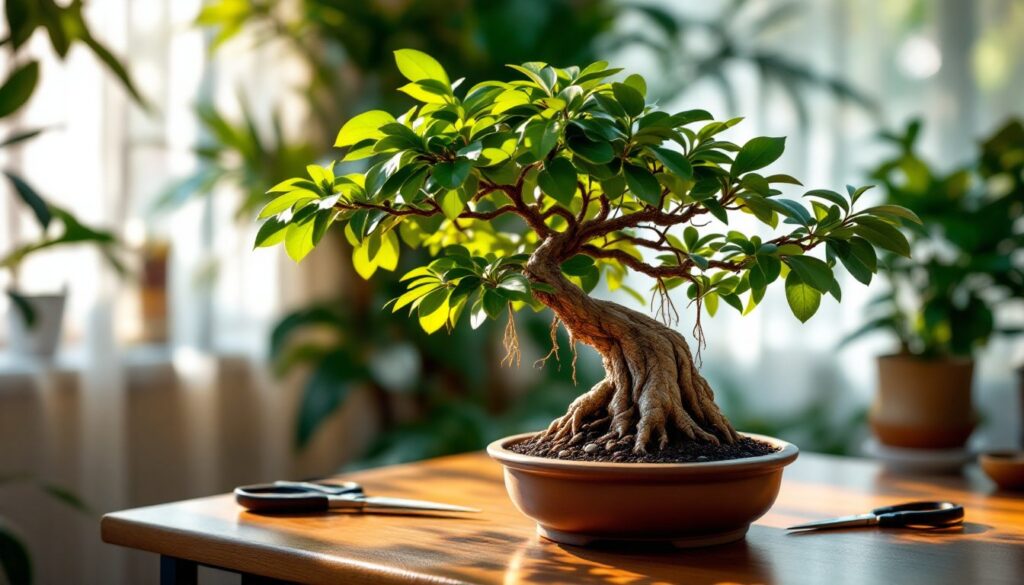
Ficus retusa and Ficus benjamina dominate the indoor bonsai market for good reason. They’re nearly indestructible if you provide consistent light and avoid extreme temperature swings. Ficus develops a thick trunk relatively quickly, and the glossy, oval leaves reduce naturally as the tree matures and you maintain regular pruning.
Ficus sends out aerial roots in humid conditions, those stringy growths that eventually thicken into secondary trunks. You can guide them into the soil with wire or trim them off if they don’t fit your design. Either way, they add visual interest.
One quirk: Ficus drops leaves when stressed by relocation, drafts, or watering changes. Don’t panic. It’ll push new growth once it adjusts. Just keep conditions stable and resist the urge to move it around the house.
Ficus handles pruning aggressively. New shoots appear quickly after trimming, which lets beginners experiment with shaping without waiting months to see results. It also responds well to wiring, though branches thicken fast, check wire every few weeks to prevent scarring.
Essential Care Requirements for Indoor Bonsai
Indoor bonsai need bright, indirect light for most of the day. South- or west-facing windows work best, though sheer curtains help diffuse harsh afternoon sun that can scorch leaves. If natural light is limited, supplement with a full-spectrum LED grow light positioned 6 to 12 inches above the canopy for 12 to 14 hours daily.
Watering is where most beginners stumble. Bonsai soil drains fast, much faster than standard potting mix, so the root ball dries out quicker than you’d expect. Check soil moisture daily by pressing a finger half an inch into the surface. If it feels dry, water thoroughly until it drains from the bottom holes. In summer or heated indoor air, that might mean daily watering. In cooler months, every two to three days.
Use room-temperature water. Cold tap water shocks roots, especially in winter. If your municipal water is heavily chlorinated, let it sit overnight before using, or switch to filtered water.
Humidity matters, though not as much as light and water. Most homes sit around 30 to 40% relative humidity in winter, which is borderline low for tropicals. Boost local humidity by setting the bonsai pot on a humidity tray, a shallow dish filled with pebbles and water. The pot sits on the pebbles above the waterline, and evaporation raises humidity around the foliage. Grouping multiple indoor tropical plants together also helps.
Avoid placing bonsai near heating vents, air conditioners, or drafty windows. Temperature swings stress the tree and cause leaf drop.
Fertilizer feeds growth during the active season. Use a balanced, water-soluble fertilizer (10-10-10 or 20-20-20 NPK) diluted to half strength, applied every two weeks from spring through early fall. In winter, most indoor bonsai slow their growth, cut feeding back to once a month or stop entirely.
Light, Water, and Humidity Needs
Light drives photosynthesis, which fuels growth and keeps foliage dense. Insufficient light causes etiolation, long, weak shoots with sparse leaves. If you notice leggy growth or pale leaves, the tree isn’t getting enough light. Move it closer to a window or add supplemental lighting.
Direct sun through glass can cook leaves, especially in summer. Monitor for browning or bleached spots on foliage. If that happens, diffuse the light or move the tree back a foot.
Watering frequency depends on pot size, soil composition, and ambient conditions. Smaller pots dry out faster. Bonsai soil typically blends akadama (fired clay), pumice, and lava rock in various ratios, this mix drains in seconds. If your bonsai came in organic potting soil, plan to repot into proper bonsai soil within a year. Organic mixes retain too much moisture and compact over time, choking roots.
Humidity below 40% stresses most tropicals. If leaf tips brown or edges curl, low humidity is often the culprit. A small humidifier nearby solves the problem, or you can mist foliage lightly in the morning (avoid misting at night, prolonged moisture invites fungal issues). According to established bonsai care guidelines, maintaining stable environmental conditions prevents most common health problems.
Water quality counts. High mineral content leaves white deposits on soil and foliage. If you see crusty buildup, flush the soil every few months by running water through the pot for a minute, then letting it drain completely.
Styling and Pruning Your Indoor Bonsai Tree
Pruning and wiring shape a bonsai. Without regular trimming, the tree reverts to natural growth patterns, tall, leggy, and visually imbalanced. Pruning controls height, encourages branching, and maintains the miniature proportions that define bonsai.
Maintenance pruning removes new shoots and leaves to preserve the tree’s silhouette. Use sharp, clean bonsai shears or scissors (not household scissors, they crush stems). Trim shoots back to one or two leaves once they extend beyond the desired canopy line. Cut just above a leaf node at a slight angle to promote healing.
Structural pruning reshapes the tree by removing entire branches. Do this in early spring before the growing season kicks in. Identify branches that cross, grow inward, or clutter the design, then cut them back to the trunk or a main branch. Seal cuts larger than ¼ inch with cut paste or wound sealant to prevent infection and speed healing.
Wiring bends branches into position. Wrap anodized aluminum wire (for deciduous trees) or annealed copper wire (for conifers and thick branches) around the branch at a 45-degree angle, starting at the base and spiraling outward. The wire should be about one-third the diameter of the branch. Bend gently, sharp angles snap wood.
Leave wire in place for two to six months, checking weekly. Branches thicken as they grow, and wire can cut into bark if left too long. Remove wire by cutting it off in sections with wire cutters: unwinding risks breaking branches.
You can explore different unique styling approaches depending on the species and your aesthetic preference, formal upright, informal upright, slanting, cascade, and semi-cascade are common styles. Each requires different pruning and wiring strategies.
Pinching controls growth on species like ficus and jade. Use fingers or tweezers to pinch off soft new growth at the tips. This encourages back-budding (new shoots along older wood) and keeps foliage dense.
Defoliation is an advanced technique used on some species (like ficus and Chinese elm) to reduce leaf size. Remove all or most leaves in early summer, and the tree pushes smaller replacement leaves. Don’t attempt this on stressed or newly repotted trees.
Repotting every two to three years refreshes soil and manages root growth. Remove the tree from its pot in early spring, trim back one-third of the root mass with sharp scissors, and replant in fresh bonsai soil. This prevents the tree from becoming root-bound and maintains nutrient availability.
Common Mistakes to Avoid with Indoor Bonsai
Overwatering kills more bonsai than underwatering. Because bonsai soil drains fast, beginners assume the tree needs constant moisture and water on a fixed schedule. Instead, check soil daily and water only when the surface feels dry. Sitting in soggy soil causes root rot, which shows up as yellowing leaves, mushy roots, and a sour smell from the pot.
Underwatering is the flip side, letting the root ball dry out completely stresses the tree and causes leaf drop. Bonsai can’t recover from prolonged drought like a cactus can. Daily checks prevent this.
Using the wrong soil is another common error. Standard potting mix retains too much water and compacts over time, suffocating roots. Bonsai soil should drain within seconds. If water pools on the surface, the soil is wrong. Repot into a proper inorganic bonsai mix of akadama, pumice, and lava rock, or a pre-mixed blend from a bonsai supplier.
Ignoring light requirements leads to weak, stretched growth. Just because a bonsai survives in low light doesn’t mean it’s thriving. If you can’t provide bright natural light, invest in a grow light. Many house plants that tolerate low light won’t include most bonsai species, these trees need strong illumination.
Skipping pest monitoring invites infestations. Check leaves and stems weekly for aphids, spider mites, scale, and mealybugs. Tiny webs, sticky residue, or discolored spots signal trouble. Treat early with insecticidal soap or neem oil, following label rates. Isolate infested trees to prevent spread.
Neglecting pruning lets the tree grow leggy and lose its shape. Even five minutes of weekly trimming keeps growth in check. Don’t wait until the tree looks overgrown, by then, you’re playing catch-up.
Using dull or dirty tools tears plant tissue and spreads disease. Keep shears sharp and wipe blades with rubbing alcohol between cuts, especially when pruning multiple trees.
Placing bonsai in low-traffic corners where they’re forgotten leads to neglect. Keep your tree somewhere you’ll see it daily, on a desk, kitchen counter, or windowsill. That visibility reminds you to check water and inspect for issues.
Fertilizing too much or at the wrong time burns roots and causes salt buildup. Stick to half-strength applications during the growing season and cut back in winter. If you see white crust on the soil surface, flush the pot with water to leach excess salts.
Finally, buying cheap «mallsai» bonsai sets you up for frustration. Those tiny trees in ceramic pots with glued-on rocks and poor soil rarely survive. Start with a healthy, well-established tree from a reputable nursery or bonsai specialist. The extra cost pays off in a tree that’s actually viable long-term. If you’re considering bonsai as a housewarming gift, choose a beginner-friendly species and include basic care instructions.