
Imagine walking into your home and having it respond to your every whim—lights dimming, music playing, and the coffee brewing, all without lifting a finger. Welcome to the world of wireless home systems, where convenience meets cutting-edge technology. These systems aren’t just gadgets; they’re your new best friends, ready to turn your humble abode into a smart sanctuary.
Gone are the days of fumbling with tangled cords and remote controls. With wireless home systems, you can control everything from your thermostat to your security cameras with just a tap on your smartphone. It’s like having a personal butler who never complains and doesn’t require a salary! So, whether you’re a tech whiz or just someone who wants to impress their friends, diving into the realm of wireless home systems could be the smartest move you make this year.
Overview of Wireless Home Systems
Wireless home systems integrate multiple smart devices, creating a seamless environment for users. These systems offer enhanced flexibility, enabling remote control for lighting, heating, and security through smartphones. Smart speakers, lighting systems, and security cameras connect via Wi-Fi, allowing for instant communication between devices.
Smart home hubs act as the central point for these systems, coordinating commands from users and facilitating inter-device connectivity. Various systems exist, including smart lighting options like Philips Hue and smart security solutions like Ring. Popular platforms include Amazon Alexa, Google Assistant, and Apple HomeKit, each providing unique functionalities and compatibility.
Ease of setup makes these systems appealing. Installation typically involves minimal wiring, reducing the complexity associated with traditional home systems. Users can quickly establish a network, requiring only a stable internet connection.
Integration adds another layer of convenience. Each device can operate in sync or independently, depending on user preference. For example, smart thermostats can adjust temperatures based on occupancy, enhancing energy efficiency.
Affordability varies among devices. While some high-end products exist, numerous budget-friendly options cater to diverse needs. The market continuously evolves, offering new features and improved functionalities. Thus, individuals can select from a wide range of products tailored to their requirements.
Overall, wireless home systems transform everyday living, offering advanced technology that enhances comfort and efficiency. Enhanced capabilities, like voice activation and remote access, significantly enrich user experience.
Benefits of Wireless Home Systems
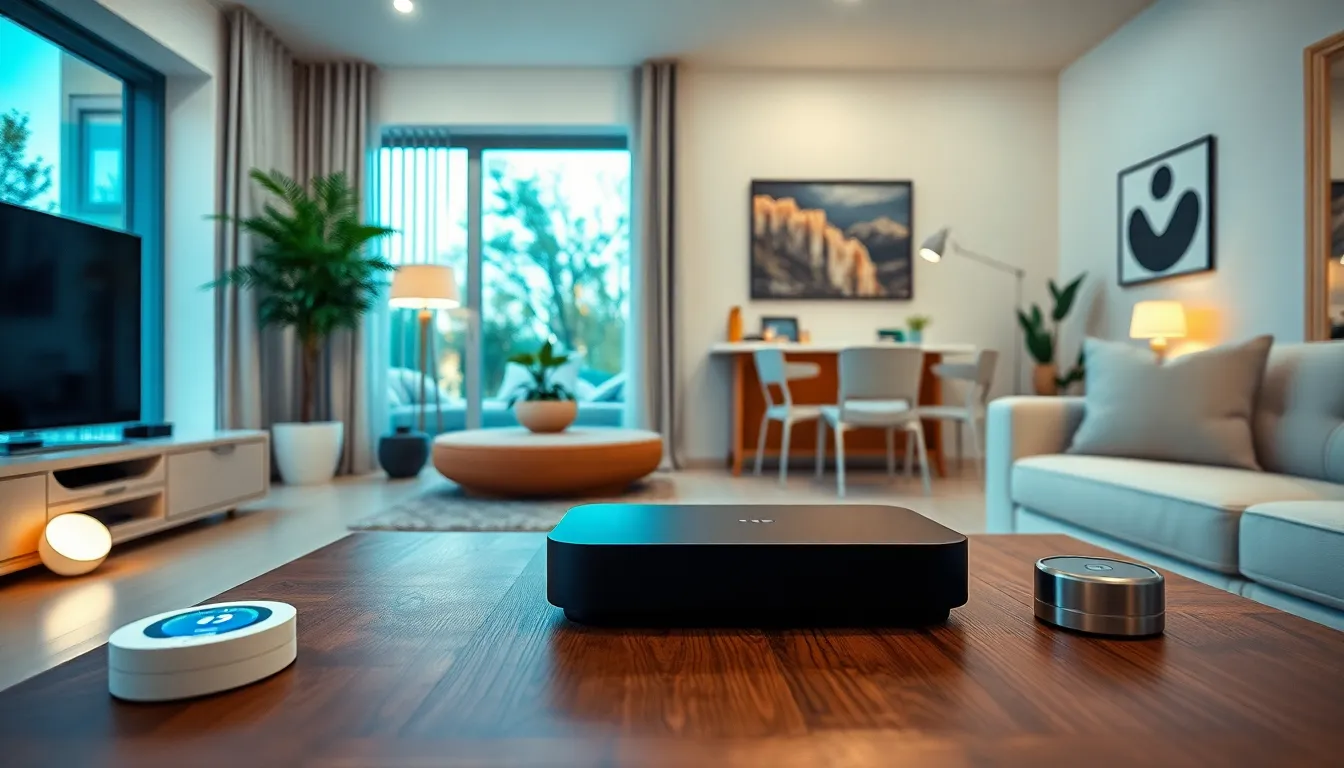
Wireless home systems offer numerous advantages that enhance daily living, primarily through convenience and cost-effectiveness.
Convenience and Flexibility
Control of smart devices provides unmatched convenience. Users manage lighting, heating, and security systems directly from their smartphones, eliminating the need for multiple remote controls. With devices interconnected via Wi-Fi, commands are executed instantly, allowing flexibility in operation. Smart home hubs, like Amazon Alexa and Google Assistant, simplify interaction by serving as central command points. Voice activation adds an effortless layer, enabling hands-free control for various tasks. Users adapt configurations based on personal preferences, adjusting settings while away from home. The seamless integration of multiple devices fosters a cohesive smart environment, making daily routines more efficient.
Cost-Effectiveness
Investing in wireless home systems leads to significant long-term savings. Energy-efficient devices, such as smart thermostats and lighting systems, automatically adjust according to occupancy. By optimizing energy usage, homeowners can prevent unnecessary costs. An array of options exists within the market, catering to varying budgets. Affordable devices still offer essential functionalities without sacrificing quality. Upfront costs often decrease with time through reduced energy bills. Additionally, many systems offer scalable solutions, allowing users to expand their smart home experience without major financial commitments. Ultimately, choosing wireless systems proves economically savvy while enhancing home comfort.
Types of Wireless Home Systems
Wireless home systems come in various types, each designed to fulfill specific functions and enhance user experience. Below are the primary categories that define wireless home systems.
Home Automation Systems
Home automation systems link numerous devices for seamless control. Users can manage lighting, heating, and air conditioning through smartphones or tablets. Devices integrate easily, allowing for scheduled actions, such as turning lights on at sunset or adjusting the thermostat remotely. Smart plugs also contribute to energy savings by enabling the management of appliances’ power usage. Popular brands include Samsung SmartThings and Philips Hue, both offering extensive compatibility with various smart devices.
Wireless Security Systems
Wireless security systems provide robust protection for homes. These systems feature components like cameras, motion detectors, and window sensors, often controllable via mobile apps. Users gain access to real-time video feeds and alerts, enhancing situational awareness. Installation remains straightforward as it typically requires no extensive wiring, appealing to many homeowners. Systems like Ring and Arlo stand out for their reliability and user-friendly interfaces, offering customizable monitoring options.
Smart Entertainment Systems
Smart entertainment systems elevate the overall media experience. These systems connect TVs, speakers, and media players, enabling users to manage content through voice commands or mobile apps. Integration with streaming services allows for direct access to movies and music. Enhanced audio systems also offer superior sound quality and immersive experiences tailored to user preferences. Brands like Sonos and Roku gain popularity for creating cohesive entertainment environments that match modern lifestyles.
Key Features to Consider
Choosing the right wireless home system involves evaluating several key features to ensure optimal performance and compatibility. Understanding these features makes it easier to create a seamless smart home experience.
Compatibility and Integration
Compatibility plays a critical role in selecting a wireless home system. Various brands and devices need to work harmoniously to maximize functionality. Systems like Amazon Alexa, Google Assistant, and Apple HomeKit offer extensive compatibility with numerous smart devices. Integrating devices from different manufacturers becomes seamless when a hub supports a broad range of protocols. Consideration should be given to both current and future device expansions. Ensuring that desired devices can integrate into the existing setup without complications improves overall user satisfaction.
Range and Reliability
Range affects how well devices communicate with each other within a wireless home system. A reliable connection across distances is essential for effective operation. Systems that utilize Wi-Fi or Zigbee protocols generally provide greater range and stability. Users should evaluate the layout of their homes, as walls and obstructions can weaken signals. Choosing devices with strong signal strength guarantees consistent performance. Additionally, considering the number of devices connected to the network helps manage potential slowdowns. Prioritizing systems known for their reliability ensures a smoother and more effective smart home experience.
Popular Wireless Home Systems on the Market
Several wireless home systems stand out in today’s market for their advanced features and user-friendly interfaces.
System A
Samsung SmartThings consistently ranks among the top options for home automation. It supports a wide range of devices, enabling users to control lighting, heating, and security from their smartphones. Compatibility with Amazon Alexa and Google Assistant enhances its appeal, offering voice command functionality. Users appreciate the flexibility to customize routines for different times of the day. Installation processes remain straightforward, requiring minimal technical expertise.
System B
Ring leads the way in wireless security systems, providing comprehensive home protection. With cameras and motion detectors, Ring notifies users of any unusual activity in real time. They find the easy installation particularly advantageous, often requiring just a few screws and a Wi-Fi connection. Integration with smart assistants allows for seamless operation alongside other devices. Ring’s subscription service enhances functionalities, enabling video storage and advanced monitoring features.
System C
Sonos excels in the realm of smart entertainment systems, creating immersive audio experiences throughout the home. Its speakers connect effortlessly to popular streaming services, allowing playback control through voice commands. Remote operation via smartphones adds convenience for users. Multi-room audio capabilities enable synchronized listening, making it ideal for gatherings. Sonos devices integrate smoothly with smart home ecosystems, increasing their versatility and effectiveness.
Wireless home systems are revolutionizing how people interact with their living spaces. By integrating convenience and advanced technology, these systems create smart environments that enhance daily routines. Users can effortlessly control lighting, security, and entertainment through their smartphones, making life not just easier but more enjoyable.
With a variety of options available, from home automation to security and entertainment systems, there’s something to suit every need and budget. As technology continues to evolve, the potential for wireless home systems will only expand, promising even greater efficiency and comfort. Embracing this innovation leads to a more connected and streamlined lifestyle, making it an investment worth considering for any modern home.