Table of Contents
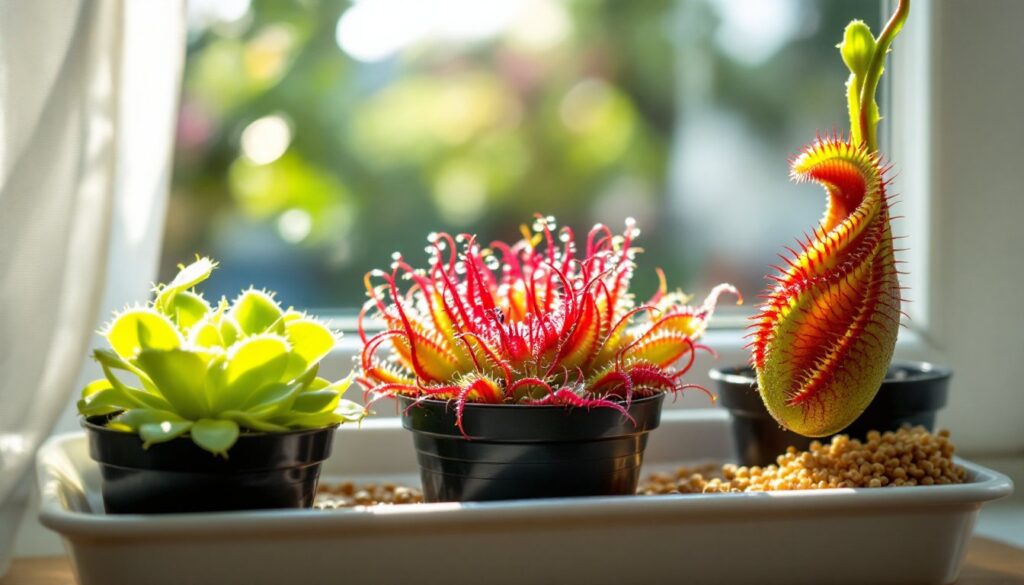
ToggleGrowing carnivorous house plants isn’t about creating a botanical horror show, it’s about keeping a living pest control system that happens to be fascinating to watch. These plants evolved in nutrient-poor environments where catching insects became a survival strategy, and with the right setup, they’ll thrive on a sunny windowsill or under grow lights. Unlike most house plants that need regular fertilizing, carnivores get their nitrogen from bugs, not bottles. This guide covers what makes them tick, which species adapt best to indoor conditions, and how to avoid the common mistakes that send beginners back to buying pothos.
Key Takeaways
- Carnivorous house plants thrive indoors when grown in nutrient-poor media with distilled or rainwater, eliminating the need for regular fertilizers.
- Venus flytraps, Nepenthes pitcher plants, and sundews are the most reliable carnivorous plants for beginners, each with distinct light and humidity requirements.
- Tap water is the leading cause of failure—dissolved minerals accumulate and poison carnivorous plants, so switch to distilled, RO, or rainwater immediately.
- Provide 4-6 hours of direct sunlight or 12-16 hours of strong grow lights (200-400 µmol/m²/s PAR) to prevent weak, pale growth and trap failure.
- Temperate species like Venus flytraps require a 3-4 month winter dormancy at 35-50°F, while tropical Nepenthes and Drosera capensis thrive year-round without cold periods.
What Are Carnivorous House Plants and How Do They Work?
Carnivorous plants are species that have adapted to capture and digest insects and other small prey to supplement their nutrient intake. They evolved in habitats like bogs, fens, and sandy acidic soils where nitrogen and phosphorus are scarce. Instead of absorbing these nutrients through roots like typical plants, they developed specialized trapping mechanisms.
There are five main trap types: snap traps (Venus flytraps that close on prey), pitfall traps (pitcher plants with slippery funnels), flypaper traps (sundews with sticky tentacles), bladder traps (aquatic plants with suction chambers), and lobster-pot traps (corkscrew plants with inward-pointing hairs). For indoor growers, the first three types are most practical.
The digestion process starts once prey is trapped. The plant secretes enzymes, primarily proteases and phosphatases, that break down the insect’s soft tissues over several days. The plant then absorbs the resulting amino acids, ammonium, and phosphate ions through specialized glands. The exoskeleton is left behind and eventually blown away or washed off.
This carnivorous lifestyle explains why standard potting soil and tap water kill these plants. Typical potting mixes contain fertilizers and minerals that carnivorous species can’t process, their roots evolved for nutrient-poor conditions and will burn when exposed to salts. Similarly, tap water contains dissolved minerals (calcium, magnesium, chlorine) that accumulate in the soil and poison the plant over time. Distilled water, reverse osmosis (RO) water, or collected rainwater are the only safe options.
Understanding this biology is critical. When home growers approach carnivorous plants the same way they treat their typical house plants, failure is nearly guaranteed.
Best Carnivorous Plants for Indoor Growing
Not all carnivorous species tolerate the compromises of indoor life. Here are the three most reliable options for home growers.
Venus Flytrap
The Venus flytrap (Dionaea muscipula) is native to a small region in North and South Carolina and remains the most iconic carnivorous plant. Each trap can only close about four to seven times before it dies off, so resist the urge to trigger it for entertainment. The plant produces new traps continuously during the growing season.
Venus flytraps need full sun, at least four to six hours of direct sunlight daily. A south-facing windowsill works in most climates, but in lower-light regions, a grow light with a PAR output above 200 µmol/m²/s placed six to twelve inches above the plant is necessary. Without adequate light, traps become elongated and pale.
They require a winter dormancy period of three to four months where temperatures drop to 35-50°F. Many indoor growers achieve this by placing the plant in an unheated garage or refrigerator with minimal light. Skip dormancy for more than one year, and the plant weakens significantly.
Keep the soil consistently moist but not waterlogged. Use a 1:1 mix of sphagnum peat moss and perlite or silica sand. Standard perlite brands like Miracle-Gro contain fertilizer additives, use horticultural-grade perlite instead.
Pitcher Plants
Pitcher plants come in two main genera suitable for indoor culture: Sarracenia (North American) and Nepenthes (tropical). Sarracenia species need the same cold dormancy as Venus flytraps, making them trickier indoors. Nepenthes, but, are tropical and don’t require dormancy, making them better candidates for year-round indoor growing.
Nepenthes produce modified leaves that form hanging pitchers filled with digestive fluid. Prey is lured by nectar glands, slips on the waxy peristome (the pitcher rim), and drowns in the liquid below. Different species have varying temperature and humidity needs, but highland Nepenthes like N. ventricosa and lowland varieties like N. x ventrata adapt well to typical home conditions.
These plants prefer bright indirect light, a few hours of morning sun or strong grow lights. They need high humidity, ideally 60-80%, which can be achieved with a humidifier, pebble tray, or terrarium setup. Unlike bog plants, Nepenthes grow as epiphytes or in loose, acidic soils. Use a mix of long-fiber sphagnum moss, perlite, and orchid bark.
Nepenthes don’t tolerate sitting in water trays the way bog species do. Water thoroughly when the top inch of media dries out, ensuring good drainage.
Sundews
Sundews (Drosera species) are often the easiest carnivorous plants for beginners. Their leaves are covered with stalked glands that produce sticky mucilage, trapping insects that land on them. The leaf then slowly curls around the prey over several hours.
The most forgiving species for indoor growing is Drosera capensis (Cape sundew). It tolerates a wider range of humidity and light levels than most carnivores, doesn’t require dormancy, and propagates readily from root cuttings or leaf cuttings. A mature D. capensis can catch dozens of gnats per week, making it surprisingly effective pest control.
Sundews need bright light, four to six hours of direct sun or equivalent grow lighting. Lack of dew production or leggy growth signals inadequate light. They grow well in the same peat-perlite mix as Venus flytraps and should sit in a water tray to maintain consistent moisture.
Other beginner-friendly sundews include Drosera aliciae and Drosera spatulata. Avoid temperate species like D. filiformis unless prepared to provide dormancy.
Essential Care Requirements for Carnivorous House Plants
Carnivorous plants have non-negotiable care needs that differ sharply from unique house plants most people grow.
Water Quality: Use only distilled, RO, or rainwater. Check the TDS (total dissolved solids) with an inexpensive meter, anything above 50 ppm is risky. Tap water, even filtered through a standard Brita pitcher, still contains dissolved minerals that will accumulate and kill the plant within months. Collect rainwater in food-grade containers if you’re growing multiple plants: distilled water gets expensive fast.
Soil Mix: Never use potting soil, compost, or fertilized mixes. For bog species (Venus flytraps, sundews, most Sarracenia), use a 1:1 ratio of sphagnum peat moss and perlite or coarse silica sand. Verify the perlite is horticultural grade without added fertilizers. For Nepenthes, use long-fiber sphagnum moss alone or mixed with perlite and orchid bark for aeration.
Light Requirements: Most carnivores evolved in open, sunny habitats. Aim for full sun or 12-16 hours of bright grow light daily. For grow lights, use full-spectrum LEDs rated at 200-400 µmol/m²/s PAR output placed six to twelve inches above the plant. Insufficient light is the most common reason traps fail to develop or lose color.
Humidity: Tropical species like Nepenthes perform best at 60-80% humidity. Bog species tolerate lower humidity but appreciate 50-60%. Strategies include grouping plants on pebble trays filled with water, using a cool-mist humidifier, or growing in a glass terrarium. Monitor with a hygrometer: don’t guess.
Feeding: Indoors, natural prey is limited. You don’t need to feed carnivorous plants, they’ll survive on photosynthesis alone, but occasional feeding (once or twice a month during the growing season) boosts growth. Use live or freeze-dried insects like crickets, mealworms, or bloodworms. Drop prey into pitchers or place on sundew leaves. For flytraps, use insects no larger than one-third the trap size. Never use dead insects that weren’t freeze-dried: they’ll mold before the plant digests them.
Temperature: Temperate species need a winter dormancy at 35-50°F for three to four months. Tropical species like Nepenthes and Drosera capensis prefer consistent 65-85°F year-round. Check species-specific needs: some highland Nepenthes need a nighttime temperature drop of 10-15°F to thrive.
Repotting: Carnivorous plants should be repotted every one to two years as the soil breaks down and compacts. Repot in early spring before active growth resumes. Use only pure, unfertilized media, and handle roots gently.
Common Mistakes to Avoid When Growing Carnivorous Plants Indoors
Even experienced plant keepers stumble with carnivores because standard house plant care rules don’t apply.
Using tap water. This is the number one killer. Even low-mineral tap water will poison carnivorous plants over time. There’s no workaround, switch to distilled, RO, or rainwater immediately.
Fertilizing. Never apply fertilizer to the soil or foliage. It burns the roots and kills the plant. These species evolved to extract nutrients from prey, not soil. If you want to boost growth, feed insects instead.
Triggering Venus flytrap traps for fun. Each trap has a limited number of closures. Repeated triggering without prey wastes the plant’s energy and causes traps to die prematurely. Let the plant work naturally.
Skipping dormancy for temperate species. Venus flytraps and many Sarracenia species require a cold dormancy period to reset their growth cycle. Without it, they weaken and die within a few years. If you can’t provide cold conditions, stick to tropical species like Nepenthes or Drosera capensis.
Insufficient light. Carnivorous plants aren’t shade-tolerant. Stretched, pale growth and lack of trap development indicate inadequate light. Move to a sunnier location or invest in a proper grow light. A desk lamp won’t cut it.
Letting the soil dry out. Bog species should remain consistently moist. Many growers use the tray method: place the pot in a saucer with a half-inch to one inch of water. Refill as it evaporates. During dormancy, reduce water but never let the soil become bone-dry.
Overwatering Nepenthes. Unlike bog plants, Nepenthes don’t sit in standing water. Water when the top inch of media is dry, then let excess drain. Root rot from soggy media kills them quickly.
Using the wrong pot. Carnivorous plants prefer plastic pots over terracotta. Terracotta is porous and leaches minerals into the soil over time. Choose pots with drainage holes.
Touching or handling excessively. The sticky mucilage on sundews and delicate traps on flytraps damage easily. Minimize handling, especially during repotting.
Buying from big-box stores without research. Many mass-market carnivorous plants are grown in incorrect media, kept in poor conditions, and near death by the time they hit shelves. When possible, order from specialized carnivorous plant nurseries. Retailers like Gardenista often recommend trusted sources and varieties suited to beginners.
Giving up after the first failure. Growing carnivorous plants involves a learning curve. Even seasoned growers lose plants occasionally. Start with a forgiving species like Drosera capensis, dial in water quality and light first, and expand from there.
With the right setup, pure water, appropriate media, strong light, and species-specific temperature needs, carnivorous house plants are no harder to grow than succulents. They just play by different rules. Once those rules click, you’ll have a collection of living pest traps that’s as functional as it is unusual.