Table of Contents
TogglePalm Beach’s luxury homes are getting smarter, and it’s not just about showing off the latest tech. Between hurricane season prep, managing humid coastal climates, and securing high-value properties, automation solves real problems for residents. Whether you’re looking to retrofit a historic estate or wire a new build from scratch, the right smart home setup can cut energy costs, add layers of security, and integrate seamlessly with the coastal aesthetic. This guide walks through what works best in this unique market, when to DIY, and when to call in a professional installer.
Key Takeaways
- Home automation in Palm Beach solves real climate, security, and hurricane-preparedness challenges specific to coastal living rather than serving purely as a status symbol.
- Smart thermostats with dehumidification modes, motorized shading, and zoned HVAC systems can reduce cooling costs by 20–30% while managing Florida’s humidity and salt-air corrosion.
- Control4, Crestron, and Savant lead the luxury market, while SmartThings and Hubitat offer modular platforms for phased rollouts without vendor lock-in.
- Hurricane preparedness automation—including motorized storm shutters with battery backup and NOAA weather integration—requires professional installation and manual override capabilities for reliability during power outages.
- Robust Wi-Fi infrastructure and mesh networks are critical hidden requirements; failing to address network coverage leads to dropped devices and system failures in concrete-and-stucco Palm Beach construction.
- Integrate automation design early with interior designers and contractors to hide technical hardware, match coastal aesthetics, and avoid costly post-drywall rework.
Why Palm Beach Homeowners Are Embracing Smart Home Technology
Palm Beach’s geography and climate create demands most smart home marketing never mentions. Salt air corrodes outdoor hardware. Hurricane shutters need reliable remote triggers. Air conditioning runs nearly year-round, and electricity bills reflect it. Homeowners here aren’t chasing trends, they’re solving for comfort, safety, and efficiency in a coastal environment.
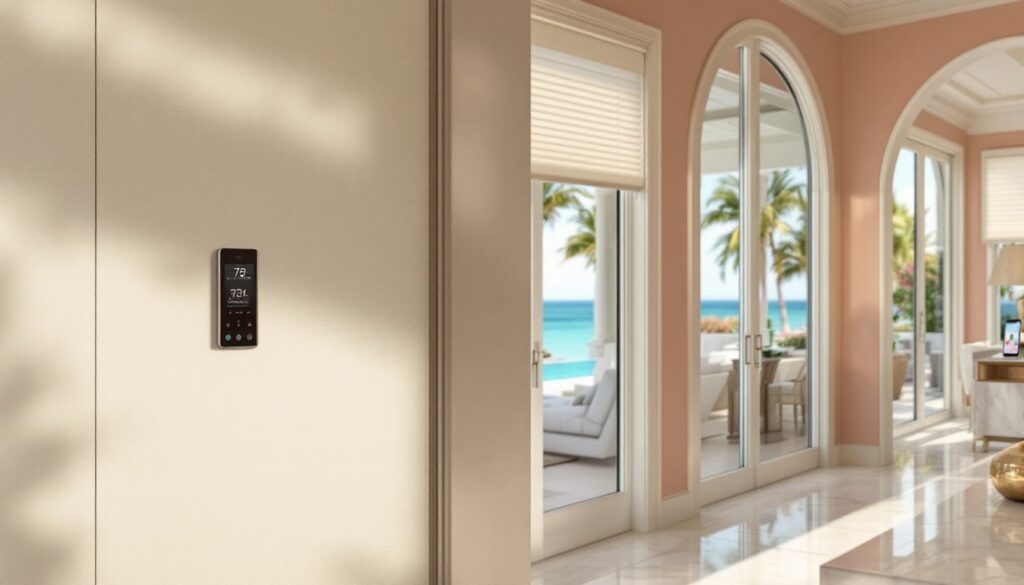
Energy management tops the list. Smart thermostats like the Ecobee Premium or Nest Learning adjust cooling schedules based on occupancy and humidity, reducing HVAC runtime without sacrificing comfort. Pair that with automated blinds that close during peak sun hours, and monthly bills drop noticeably. Florida’s high UV index and heat gain through windows make motorized shading a practical investment, not a luxury add-on.
Security concerns are amplified by property values and seasonal occupancy. Many Palm Beach homes sit vacant for months while owners travel. Smart locks, video doorbells, and interior cameras with cellular backup give remote visibility and control. Integration with local alarm monitoring services ensures response even when the owner’s thousands of miles away.
Hurricane preparedness is another driver. Automated storm shutters, either accordion-style or roll-down, can be deployed remotely before a storm hits. Some systems tie into local weather alerts and send push notifications when conditions warrant action. That’s a meaningful upgrade over manual cranks or panels that require onsite installation.
Popular Home Automation Systems for Palm Beach Homes
Not all platforms handle Florida’s coastal conditions equally. Salt, humidity, and intense sun exposure demand ruggedized outdoor components and robust wireless protocols. The systems seeing the most traction in Palm Beach balance reliability, scalability, and integration with high-end finishes.
Control4, Crestron, and Savant dominate the luxury market. These are professionally installed, closed ecosystems that integrate lighting, climate, security, entertainment, and motorized shades into a single interface. Control4’s Neeo remote and touchscreen panels are popular for their clean design and dealer support network. Crestron appeals to estates with complex AV setups and whole-home audio. Savant’s mobile app and integration with Apple HomeKit attract tech-forward owners who want flexibility.
For owners tackling smaller projects or phased rollouts, Samsung SmartThings, Hubitat Elevation, or Home Assistant offer modular approaches. These platforms support Zigbee, Z-Wave, and Wi-Fi devices, letting homeowners mix brands and add components over time. They require more DIY comfort but avoid vendor lock-in.
Smart Climate Control for Florida’s Coastal Environment
Florida’s humidity isn’t just uncomfortable, it’s a mold and mildew risk. Smart HVAC controls need to manage both temperature and moisture. Look for thermostats with dehumidification modes and integration with whole-home dehumidifiers. Ecobee’s remote sensors help balance cooling across multi-story homes where upper floors bake while lower levels stay cool.
Zoned HVAC systems paired with smart dampers give room-level control, crucial in homes where guest wings sit unused for weeks. Brands like Flair and Keen make retrofit smart vents that modulate airflow without replacing ductwork. These setups can save 20–30% on cooling costs in large homes by avoiding waste in unoccupied spaces.
Ceiling fans with smart controls (Haiku by Big Ass Fans, Hunter Symphony) integrate with thermostats to circulate air and reduce compressor runtime. In coastal homes with high ceilings and open floor plans, fan automation makes a measurable difference. Recent smart home reviews consistently highlight fan integration as an overlooked efficiency gain.
Advanced Security and Hurricane Protection Automation
Palm Beach security setups often layer multiple technologies: perimeter cameras, smart locks, glass-break sensors, and integration with private security patrols. Outdoor cameras need IP66 or higher weatherproof ratings to survive salt spray and tropical storms. Ubiquiti’s UniFi Protect line and Lorex’s wired systems are common choices for their local storage and no subscription requirements.
Smart locks should have backup power (battery or external pack) and mechanical key override. August Wi-Fi locks and Schlage Encode Plus work well in high-humidity environments and integrate with most platforms. Avoid cheap Z-Wave locks with plastic internal gears, they fail in salty air.
For hurricane protection, motorized storm shutters from brands like Rolling Shield or Armor Screen integrate with home automation hubs. Systems can be programmed to close automatically when wind speeds hit a threshold (via NOAA weather feeds) or triggered remotely. Manual override is essential, power outages are common during storms, and you need a crank backup. According to home automation testing, battery backup for motors is a must-have, not a nice-to-have.
DIY vs. Professional Installation: What Palm Beach Residents Should Know
The line between DIY-friendly and pro-only work in home automation often comes down to three factors: electrical code compliance, network complexity, and integration requirements. Palm Beach’s high property values and homeowner association rules add another layer, some HOAs require licensed contractors for visible exterior work, including cameras and smart doorbells.
DIY-appropriate projects include plug-in smart devices (outlets, lamps, fans), battery-powered sensors (door/window contacts, motion detectors), and self-contained systems like video doorbells and smart locks. If you’re comfortable running basic network cables and setting up a wireless router, platforms like DIY home automation guides can walk you through SmartThings or Hubitat setups. Budget 8–12 hours for initial configuration and device pairing.
When to hire a pro: hard-wired lighting control (Lutron Caséta or RadioRA), in-wall touchscreens, motorized shades over 8 feet wide (they need blocking in the wall for mounting), whole-home audio, and any low-voltage wiring that penetrates fire-rated walls. In Florida, running new circuits for smart switches or outlets requires a licensed electrician. If you’re integrating with a security system monitored by a third party, installers often require professional setup to maintain warranties.
Network infrastructure is the hidden gotcha. Reliable automation needs robust Wi-Fi coverage or a wired backbone. In concrete-and-stucco Palm Beach construction, Wi-Fi signals struggle. Professionals install mesh systems (Eero Pro, UniFi) or run Cat6 cable to access points. Skipping this step leads to devices dropping offline, the #1 complaint in DIY smart homes.
If you’re unsure, hire a home automation installer for design consultation ($150–$300) and tackle the plug-and-play devices yourself. They’ll spec network gear, identify code issues, and flag where permits are needed.
Integrating Smart Technology with Luxury Coastal Aesthetics
Palm Beach homes lean toward Mediterranean Revival, British Colonial, and contemporary coastal styles. Visible tech, bulky wall panels, plastic switches, or black camera domes, clashes with the aesthetic. The best installations hide the brains and showcase only refined control surfaces.
In-wall switches and dimmers should match trim and fixture finishes. Lutron offers custom-color faceplates (including metallics and wood veneers) that blend with high-end interiors. Their Palladiom line hides keypads behind hinged artwork or mirrors. For minimalist modern homes, Basalte’s brushed aluminum touchscreens mount flush and look like design elements, not tech.
Motorized shades come in fabrics that block UV without darkening rooms, critical for water views. Specify salt-air rated motors for screened terraces and outdoor living areas. Brands like Lutron Serena and Hunter Douglas PowerView offer fabrics designed for coastal humidity and mildew resistance. Don’t cheap out here, replacing failed motors in a ceiling-mounted cassette requires drywall repair.
Outdoor speakers and cameras can be housed in weather-resistant enclosures that look like light fixtures or landscape elements. Sonance makes rock-shaped outdoor speakers that disappear into plantings. For cameras, consider recessed soffit mounts instead of conspicuous bullet cams. Systems like automatic home control can integrate discrete sensors and controls without cluttering sightlines.
If you’re working with an interior designer, bring your automation installer into the conversation early. Cable pathways, device locations, and control panel placement need to be planned during rough-in, not after drywall’s up. Testing insights from Digital Trends show that cohesive planning between trades prevents costly rework and visible compromises.
Conclusion
Home automation in Palm Beach isn’t about gadgets, it’s about systems that handle the realities of coastal living. Start with climate control and security, then layer in convenience features like lighting scenes and automated shades. Whether you’re configuring whole home automation or adding a few smart devices, prioritize weatherproofing, network reliability, and integration over flashy features. Done right, your system will run quietly in the background, making life easier without demanding constant attention.