Table of Contents
ToggleMost homeowners eyeing their regular LED bulbs wonder if they can skip the specialty grow light expense and just use what’s already screwed into their fixtures. The short answer: sometimes. Regular LEDs can support certain houseplants, but they’re not a one-size-fits-all solution. The difference comes down to light spectrum, intensity, and what the plant actually needs to photosynthesize. Before anyone runs out to buy a $200 grow light setup or assumes their desk lamp will turn them into an indoor gardener, it’s worth understanding what standard LEDs can and can’t do, and when the investment in proper grow lights actually pays off.
Key Takeaways
- Regular LED lights can support low-light houseplants like pothos, snake plants, and ZZ plants, but only when positioned 12–18 inches away and run for 12–16 hours daily.
- Normal LEDs lack the high-intensity blue and red wavelengths that dedicated grow lights provide, making them inadequate for flowering, fruiting, or vegetable production indoors.
- Daylight-spectrum LEDs (5000K–6500K) outperform warm white bulbs and should be used for better photosynthesis and compact plant growth.
- Using normal LED light for growing is most cost-effective for casual gardening ($40–$60 annually), while dedicated grow light panels ($55–$125) are worth the investment for serious indoor gardening projects.
- To optimize regular LED setups, cluster multiple bulbs, add reflective surfaces, and maintain consistent photoperiods—but upgrade to grow lights if plants show leggy growth or pale leaves despite optimization.
Understanding the Difference Between Regular LEDs and Grow Lights
Regular LED bulbs are engineered to produce light that looks natural to human eyes, typically in the 2700K to 5000K color temperature range. They emphasize the middle spectrum (greens and yellows) because that’s what makes rooms feel comfortable and well-lit. Plants, but, primarily use blue light (400–500 nm) for vegetative growth and red light (600–700 nm) for flowering and fruiting.
Grow lights are purpose-built to deliver higher concentrations of blue and red wavelengths, often resulting in that distinctive purple glow. They also provide higher photosynthetic photon flux density (PPFD), a measurement of usable light that reaches the plant canopy, typically expressed in micromoles per square meter per second (μmol/m²/s). A decent grow light delivers 200–400 μmol/m²/s for low-light plants and 400–600+ for high-light species.
Standard LEDs usually output far less intensity in the useful spectrum. A typical 60-watt equivalent LED (around 9 actual watts) might provide only 800–1000 lumens, and only a fraction of that falls within the photosynthetically active radiation (PAR) range plants need. That’s adequate for maintaining some foliage plants, but it won’t support robust growth or flowering in most cases.
That said, full-spectrum white LEDs (5000K–6500K) do emit some blue and red light. They’re not optimized like a grow light, but they’re better than warm white bulbs, which skew heavily yellow and offer minimal blue spectrum.
Can Regular LED Bulbs Support Indoor Plant Growth?
Yes, but with significant caveats. Regular LEDs can keep low-light houseplants alive and even support modest growth if positioned correctly. They won’t replace sunlight or dedicated grow lights for anything demanding, but they can bridge gaps in natural light or serve as supplemental lighting.
The key factors are proximity, duration, and bulb type. A plant needs to be within 12–24 inches of the bulb to receive adequate intensity. Inverse square law applies here: double the distance, and light intensity drops to one-quarter. A ceiling fixture eight feet up does almost nothing for a plant on a side table.
Photoperiod also matters. Most foliage plants need 12–16 hours of light daily to maintain healthy growth. If the LED is only on during evening hours, it’s not providing enough cumulative energy for photosynthesis. A plug-in timer (available for under $10 at any hardware store) can automate this.
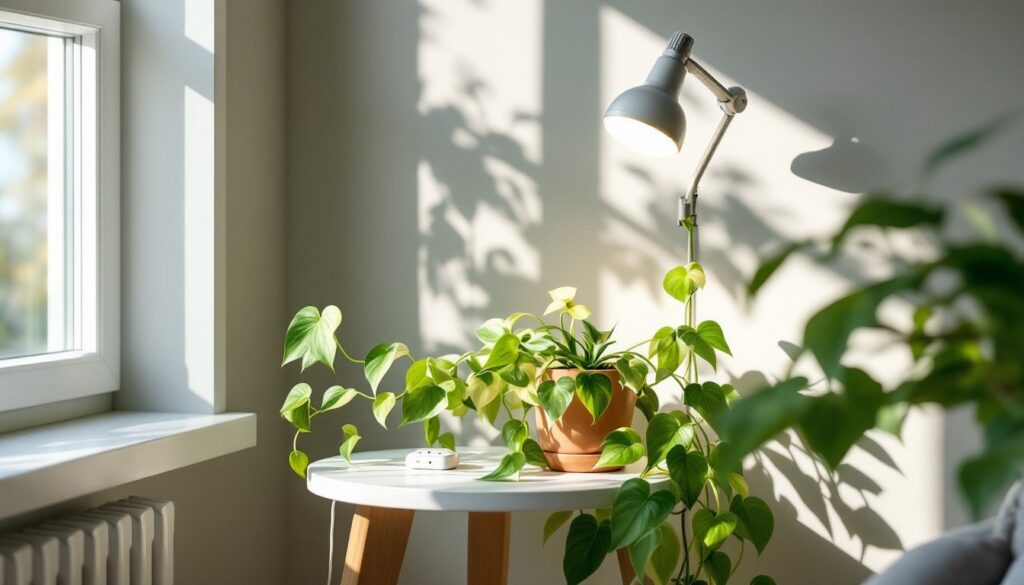
Bulb selection makes a difference. Go with daylight-spectrum LEDs (5000K–6500K) rather than warm white (2700K–3000K). The higher color temperature includes more blue light, which drives chlorophyll production and compact, healthy foliage. Wattage alone isn’t the best measure, look for lumens and color temp on the package. A 100-watt equivalent LED (14–17 actual watts) in daylight spectrum will outperform a lower-wattage warm bulb every time.
Don’t expect miracles. Regular LEDs won’t trigger blooming in African violets, won’t support a vegetable garden, and won’t turn a low-light corner into a jungle. But they can absolutely keep a pothos or snake plant thriving in a windowless office or basement.
Which Houseplants Can Thrive Under Normal LED Lighting
Some houseplants are remarkably forgiving and will tolerate the limited spectrum of regular LEDs. These species evolved in low-light forest understories and don’t require intense light to survive.
Low-light tolerant plants that do well under standard LEDs:
- Pothos (Epipremnum aureum): Nearly indestructible. Tolerates low light and irregular watering. Will grow slower under LEDs than in bright indirect light, but won’t decline.
- Snake plant (Sansevieria trifasciata): Extremely low light tolerance. Can go weeks between waterings. Grows very slowly under regular LEDs but stays healthy.
- ZZ plant (Zamioculcas zamiifolia): Thick, waxy leaves store water. Thrives in low light. One of the best candidates for LED-only setups.
- Philodendron species: Heartleaf philodendron and similar varieties adapt well. Growth slows but foliage remains vibrant.
- Dracaena varieties: Tolerate low light and dry air. Larger specimens do well under overhead LED fixtures.
- Cast iron plant (Aspidistra elatior): The name says it all. Survives neglect and poor lighting.
Many of these overlap with traditional house plants that need little light, making them ideal for spaces where natural light is scarce and investing in grow lights feels excessive.
Plants that won’t thrive under regular LEDs:
- Succulents and cacti (need high intensity and specific spectrum)
- Flowering plants like orchids or African violets (require red spectrum for blooming)
- Herbs and vegetables (demand high PPFD for productive growth)
- Fiddle leaf figs and other high-light tropicals (will drop leaves and decline)
If a plant’s care tag says “bright indirect light” or higher, regular LEDs won’t cut it as the sole light source.
When You Should Upgrade to Dedicated Grow Lights
Grow lights become necessary when regular LEDs can’t deliver the spectrum or intensity a plant requires, or when the goal shifts from maintenance to active growth, flowering, or food production.
Upgrade if any of these apply:
- Growing edibles indoors: Herbs, microgreens, tomatoes, peppers, and lettuce all need 200–600+ μmol/m²/s, far beyond what standard LEDs provide. Without adequate light, plants become leggy, weak, and unproductive.
- Supporting flowering or fruiting plants: Blooming requires red spectrum wavelengths (around 660 nm) in higher concentrations than regular bulbs emit. If the goal is flowers or fruit, a grow light is non-negotiable.
- Propagating cuttings or starting seeds: Young plants need consistent, intense light to establish roots and develop strong stems. Insufficient light leads to spindly, weak seedlings that fail after transplanting.
- No access to natural light: A basement grow room, interior bathroom, or windowless office can’t rely on LEDs alone for most species. Grow lights provide the full-spectrum intensity plants evolved to expect.
- Supplementing weak winter light: In northern climates, winter sun through a window often isn’t enough. Adding grow lights extends photoperiods and compensates for low angle and shorter days.
Experienced indoor gardeners often note in design-focused resources that grow lights are essential for achieving lush, display-quality plants year-round, especially in challenging spaces.
Grow light options:
- Full-spectrum LED panels: 20–50 watts, $30–$100. Best for small to medium setups. Look for adjustable height and at least 200 μmol/m²/s at 12 inches.
- T5 or T8 fluorescent fixtures: Older tech but still effective for seedlings and low-light plants. Less energy-efficient than LEDs.
- COB (chip-on-board) LEDs: High intensity, good for larger plants or multiple specimens. 100+ watts, $80–$200.
If the plant isn’t thriving after optimizing regular LED placement and duration, a grow light is the next logical step.
How to Optimize Your Regular LED Setup for Better Plant Growth
Maximizing the effectiveness of standard LEDs requires intentional placement, timing, and environmental tweaks. Small adjustments can make the difference between a struggling plant and one that holds its own.
1. Position bulbs 12–18 inches above foliage. Closer is better, but avoid heat stress (LEDs run cooler than incandescents, but high-wattage bulbs can still generate warmth). Use an adjustable desk lamp or clip-on fixture for flexibility.
2. Use multiple bulbs to increase coverage and intensity. A single 14-watt LED won’t provide enough light for a large plant or a group of smaller ones. Clustering 2–4 bulbs around the plant increases effective PPFD. Simple clamp lights with reflectors (available at hardware stores for $8–$15 each) work well.
3. Add reflective surfaces. White walls, aluminum foil, or reflective Mylar sheets bounce light back onto the plant, increasing usable intensity by 20–30%. Don’t underestimate this, it’s free extra light.
4. Run lights 12–16 hours per day. Use a timer to maintain consistency. Plants respond better to predictable photoperiods than erratic schedules. Most houseplants don’t need a “rest” period beyond 8 hours of darkness.
5. Choose the highest color temperature available. If buying new bulbs, pick 6500K daylight LEDs over 2700K warm whites. The blue-heavy spectrum is more photosynthetically active.
6. Monitor plant response. Leggy growth and pale leaves signal insufficient light. Adjust distance, duration, or bulb count. Leaf scorch or browning tips mean the bulb is too close or the plant is getting too much intensity (rare with standard LEDs, but possible).
7. Pair LEDs with natural light when possible. Even a north-facing window provides some usable spectrum. Regular LEDs work best as supplemental lighting, not sole-source.
Many country-style home enthusiasts have found success using affordable LED setups in kitchens and mudrooms where natural light is limited but aesthetic appeal still matters.
Cost Comparison: Regular LEDs vs. Grow Lights for Indoor Gardening
Budget often drives the decision between using what’s already in the house and buying specialty lighting. Here’s how the numbers break down, though costs vary by region and retailer.
Regular LED bulbs:
- Upfront cost: $2–$8 per bulb (60–100 watt equivalent, daylight spectrum)
- Fixture cost (if needed): $8–$20 for a clamp light or desk lamp
- Energy cost: A 14-watt LED running 14 hours/day uses about 0.196 kWh/day. At $0.13/kWh (US average), that’s roughly $0.93/month or $11/year per bulb.
- Total first-year cost (2-bulb setup): ~$40–$60 including bulbs, fixtures, and electricity
Dedicated grow lights:
- Upfront cost: $30–$100 for a basic LED grow panel (20–50 watts)
- Fixture cost: Usually built-in or includes hanging hardware
- Energy cost: A 30-watt grow light running 14 hours/day uses about 0.42 kWh/day, or roughly $2/month, $24/year.
- Total first-year cost (single panel): ~$55–$125
For maintaining a few low-light houseplants, regular LEDs are clearly cheaper. For anyone serious about growing herbs, starting seeds, or supporting a diverse indoor garden, the modest upfront difference is worth it. Grow lights deliver far better results per watt and often include features like adjustable spectrum, timers, and optimized reflectors.
Long-term considerations:
- LED lifespans (both regular and grow) typically exceed 25,000 hours, roughly 5 years at 14 hours/day.
- Grow lights often come with warranties: cheap regular bulbs usually don’t.
- Energy efficiency favors LEDs over older fluorescent or HID grow lights by 40–60%.
Projects featured in resources like The Spruce often emphasize that matching the light source to the project scope prevents wasted money on either inadequate or over-spec’d equipment.
Conclusion
Regular LEDs can absolutely keep low-light houseplants alive and looking decent, especially when positioned close and run on a consistent schedule. But they’re not a substitute for grow lights when the goal is robust growth, flowering, or food production. Know the plant’s needs, match the light source accordingly, and don’t expect a warm-white ceiling fixture to perform miracles. For most casual indoor gardeners, starting with standard daylight LEDs is a reasonable first step, and upgrading only if the plants demand it.