Table of Contents
ToggleBathrooms often get overlooked in the houseplant game. Too dark, too humid, too cramped, or so the thinking goes. But here’s the thing: those exact conditions make bathrooms ideal for a specific group of plants that actually prefer indirect light and moisture in the air. Instead of fighting your bathroom’s environment, why not work with it? The right low-light plants can soften hard tile surfaces, filter the air, and turn a purely functional space into something genuinely inviting. No sunbeam required.
Key Takeaways
- Bathrooms are ideal for low-light plants because they naturally provide indirect light, high humidity, and stable temperatures—conditions that mimic the forest environments where these plants evolved.
- Snake plants, pothos, and ZZ plants are the best plants for bathroom low-light conditions, requiring minimal watering and tolerating inconsistent schedules while improving air quality.
- Proper bathroom plant care depends on checking soil moisture before watering (not the ambient humidity), using well-draining potting mix, and ensuring ventilation to prevent mold and fungal issues.
- Creative placement strategies like hanging planters, floating shelves, and tiered stands maximize green space without sacrificing counter room in small bathrooms.
- Regular leaf cleaning, reduced fertilizer schedules, and pest monitoring (especially for fungus gnats) keep bathroom plants healthy and prevent common moisture-related problems.
- Even windowless bathrooms can support thriving plants with a 15-watt LED grow bulb running 8–10 hours daily to supplement low natural light.
Why Bathrooms Are Perfect for Low-Light Plants
Most bathrooms share a few key traits: limited natural light (thanks to small windows or frosted glass), high humidity from showers and baths, and moderate to warm temperatures. These aren’t obstacles, they’re advantages if you choose the right plants.
Low-light plants evolved in forest understories where direct sun never reaches the ground. They adapted to survive on filtered, indirect light and thrive in stable humidity. That’s essentially what a bathroom offers. The moisture from daily showers replicates the damp air of a tropical or subtropical forest floor, reducing the need for constant misting or watering.
Temperature stability matters, too. Bathrooms rarely experience the dramatic swings that living rooms or entryways do (nobody cranks open a bathroom window in January). Most tropical foliage plants prefer temps between 65–80°F, which matches the range in most residential bathrooms.
One caution: ventilation still matters. Plants need air circulation to prevent mold and fungal issues on leaves and soil. If your bathroom has zero airflow and stays perpetually damp, crack a door or window occasionally or run the exhaust fan after showers. Stagnant, soaking-wet air invites problems even for moisture-loving plants.
Finally, bathrooms typically have less foot traffic and fewer drafts than kitchens or hallways. That stability lets plants settle in without constant disruption. Just keep them away from direct contact with cleaning sprays, residue from tile cleaner or bleach on leaves can cause damage.
Top Low-Light Plants That Thrive in Bathroom Conditions
Not every low-light plant handles bathroom humidity equally well. The following three are nearly bulletproof in typical bathroom environments and require minimal fuss.
Snake Plant: The Indestructible Bathroom Companion
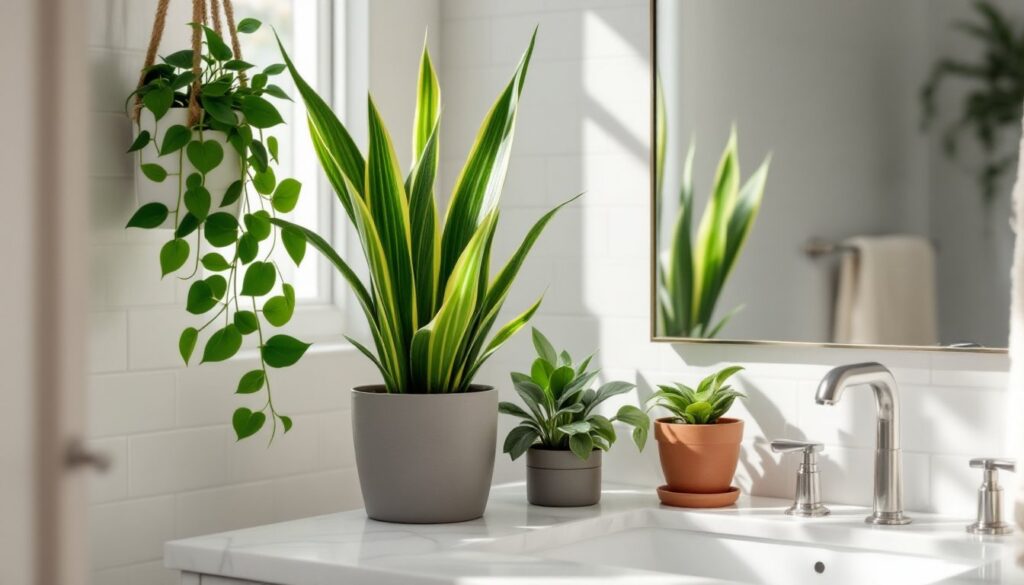
Snake plant (Sansevieria trifasciata) is the go-to plant for anyone who’s killed a succulent by overwatering. Its thick, upright leaves store water, so it tolerates both neglect and inconsistent watering schedules. In low light, snake plants grow more slowly but remain healthy and upright.
In a bathroom, the ambient humidity actually benefits snake plants by reducing the risk of crispy leaf tips (a common issue in dry indoor air). They’re also tolerant of temperature swings if you occasionally open a window. For placement, snake plants work on countertops, shelves, or even the floor in larger bathrooms. Nominal pot size: 6–10 inches works for most counter or floor placements.
One heads-up: snake plants are mildly toxic to pets if ingested, so keep them out of reach if your cat likes to nibble greenery. Watering needs are minimal, every 2–3 weeks in winter, slightly more in summer if the bathroom stays warm. Let the soil dry completely between waterings. Overwatering is the only reliable way to kill a snake plant, and it’ll show as mushy, yellowing leaves at the base.
Sansevieria varieties range from the classic tall, striped ‘Laurentii’ to compact ‘Hahnii’ (bird’s nest snake plant), which stays under 8 inches tall and fits on narrow shelves or windowsills.
Pothos: Versatile and Vigorous in Humid Spaces
Pothos (Epipremnum aureum) is the plant equivalent of a Labrador: friendly, adaptable, and nearly impossible to mess up. Its trailing vines make it perfect for hanging baskets, high shelves, or even training along a mirror frame or shower rod (as long as it’s not in the direct spray).
Pothos thrives in the high-humidity environment that bathrooms naturally provide, and it tolerates low to moderate light without complaint. In dimmer conditions, variegated varieties (like ‘Marble Queen’ or ‘N’Joy’) may lose some of their white or yellow patterning and revert to solid green, but the plant stays healthy and continues growing.
Water when the top inch or two of soil feels dry. In a humid bathroom, that might be every 7–10 days. Pothos will droop visibly when thirsty, which makes it easy to read. If you’re new to house plants that need little light, pothos is an excellent starting point, it’s forgiving and fast-growing.
Pothos is also mildly toxic to pets and humans if ingested (it contains calcium oxalate crystals), so keep it out of reach. The upside? It’s excellent at filtering airborne VOCs, making it a functional addition to a bathroom where cleaning products and personal care items off-gas chemicals.
For best results, give pothos a balanced liquid fertilizer diluted to half strength every 4–6 weeks during spring and summer. Skip fertilizing in fall and winter when growth slows.
ZZ Plant: Glossy Elegance for Dark Corners
ZZ plant (Zamioculcas zamiifolia) handles low light better than almost any other common houseplant. Its thick, waxy leaves reflect whatever light is available, giving it a polished, almost architectural look. ZZ plants grow from underground rhizomes that store water, so they tolerate irregular watering and won’t punish you for a missed week.
In a bathroom, the naturally higher humidity keeps the glossy leaves dust-free and vibrant. ZZ plants are slower growers than pothos, but that’s a benefit in small bathrooms where space is tight, you won’t need to prune or repot constantly. A 6–8 inch pot fits most counters or floors without crowding.
Place ZZ plants away from direct water contact (don’t set them in the shower splash zone), but they’ll do fine on a counter, shelf, or even a toilet tank if the surface is stable. The thick stems can get top-heavy in older plants, so use a weighted or ceramic pot if you’re placing it somewhere with risk of tipping.
Watering needs are minimal: every 2–3 weeks is typical, but in a humid bathroom you might stretch that to once a month in winter. Yellowing leaves usually signal overwatering. Like snake plant, root rot from soggy soil is the main failure point. Use well-draining potting mix and a pot with drainage holes.
ZZ plants are toxic if ingested, and the sap can cause skin irritation in sensitive individuals, so wear gloves when handling or pruning and wash hands afterward.
Essential Care Tips for Bathroom Plants
Even easy-care plants need a few basics to stay healthy long-term. Here’s what to prioritize in a bathroom setting.
Light assessment: “Low light” doesn’t mean no light. If you can comfortably read a book in the bathroom during the day without turning on a light, there’s enough for the plants listed here. If the room is truly dark all day (interior bathroom with no window), consider installing a small LED grow bulb in an existing fixture. A 15-watt full-spectrum LED provides enough supplemental light for low-light plants if run 8–10 hours daily.
Watering discipline: High humidity doesn’t eliminate the need for watering, but it does slow evaporation. Check soil moisture by sticking a finger 1–2 inches down. If it’s dry, water. If it’s damp, wait. Most bathroom plant casualties come from chronic overwatering, not underwatering. Use pots with drainage holes and empty the saucer after watering to prevent roots from sitting in standing water.
Soil choice: Use a well-draining potting mix formulated for houseplants. Avoid garden soil or pure peat, which compact and hold too much moisture. For snake plants and ZZ plants, a cactus/succulent mix (which includes sand or perlite) improves drainage and reduces rot risk. Pothos does fine in standard potting mix.
Dust and residue: Bathroom plants collect hairspray, soap residue, and general grime. Wipe leaves with a damp cloth every few weeks to keep pores open and maintain that glossy look. This also helps you spot pests (like spider mites or scale) early.
Fertilizer: Bathroom plants grow more slowly in low light, so they need less fertilizer than plants in brighter spots. A diluted, balanced liquid fertilizer (like 10-10-10 or 20-20-20 at half strength) every 6–8 weeks during the growing season is plenty. Skip feeding entirely in fall and winter unless the plant is actively putting out new growth.
Pest vigilance: Fungus gnats love the moist soil in bathroom plants. If you see tiny black flies around pots, let the soil dry out more between waterings and consider adding a thin layer of sand or fine gravel on top of the soil to break the gnat lifecycle. Yellow sticky traps near plants catch adults.
Creative Placement Ideas to Maximize Your Bathroom Plant Display
Bathrooms often have awkward layouts and limited horizontal surfaces. Getting creative with placement lets you add greenery without sacrificing counter space or creating clutter.
Hanging planters: Ceiling hooks or adhesive wall hooks (rated for the weight of a potted plant) let you hang pothos or trailing philodendrons above the toilet, in a shower corner (if outside the direct spray), or near a window. Use macramé hangers or simple rope to adjust height. Make sure hooks are anchored into a stud or solid backing, drywall anchors alone won’t hold a hanging plant long-term.
Shelving above the door or toilet: A floating shelf mounted 6–8 inches below the ceiling creates space for plants while keeping them out of the way. Combine plants of different heights (a tall snake plant next to a trailing pothos) for visual interest. If your bathroom has limited natural light, placing plants higher often gets them closer to overhead windows or skylights.
Windowsill staging: Even a narrow windowsill can hold a small pot or two. Use saucers or trays to protect the sill from water damage. If the window gets direct sun, rotate plants occasionally so one side doesn’t burn, or choose plants like pothos that tolerate a bit more light.
Shower shelf or niche: If your shower has a built-in niche or shelf well away from the direct spray, a small fern or pothos thrives in the steamy environment. Just be sure the plant isn’t getting soaked every day, residual moisture from steam is beneficial, but constant water exposure invites rot. This approach works best with low-maintenance plants that handle moisture well.
Vanity or countertop clusters: Group two or three small pots on a tray for easy watering and a cohesive look. Varying pot styles (ceramic, terra cotta, plastic) adds texture, but keep colors in the same family to avoid a chaotic appearance. Plants near sinks get accidental humidity boosts every time someone washes their hands.
Over-the-door hooks or ladder shelves: Freestanding ladder shelves lean against a wall and provide multiple tiers for plants without drilling holes. Over-the-door hooks work for hanging planters if you have a solid-core door that can handle the weight.
For more ideas on creative indoor plant displays, consider repurposing vintage containers, wall-mounted planters, or tiered plant stands that fit in tight corners. Just make sure any container without drainage holes is used as a decorative cachepot with a nursery pot inside, so water can drain freely.
Safety note: Keep plants and trailing vines away from heat sources like space heaters or heated towel racks. Also, make sure hanging plants are secured well, nobody wants a pothos landing in the sink during a shower. When arranging plants on glass shelves, check that the shelf is rated for the combined weight of pots, soil, and water.
Bathroom plants aren’t just decor. They filter air, stabilize humidity, and make a utilitarian space feel more livable. With the right picks and a bit of smart placement, even a windowless bathroom can support thriving greenery.