Table of Contents
ToggleIndoor spaces aren’t just floor plans, they’re opportunities. Climbing plants bring life upward, filling bare walls, dull corners, and empty vertical zones with lush foliage. Unlike floor plants that claim precious square footage, climbers expand into the air, turning awkward alcoves and blank stretches into living features. Whether you’re working with a studio apartment or a two-story entryway, vertical greenery offers practical beauty without sacrificing walkability. This guide covers selecting, supporting, and maintaining indoor climbers so they thrive, not just survive, in your home.
Key Takeaways
- Climbing plants maximize vertical space in small homes, softening architectural lines and adding lush foliage without sacrificing walkability or floor space.
- Popular beginner-friendly indoor climbers like pothos, heartleaf philodendron, and English ivy tolerate low light and irregular watering, making them ideal for novice plant parents.
- Proper support systems—moss poles for aerial roots, trellises for twining vines, and wire mesh for tendrils—are essential for training climbing plants to thrive indoors.
- Overwatering is the leading cause of death in climbing plants; use the finger test method and adjust watering frequency seasonally to prevent root rot.
- Climbing plants improve indoor air quality by actively filtering toxins like formaldehyde and benzene, while also providing aesthetic flexibility through pruning, training, and easy propagation from cuttings.
- Tropical indoor climbing plants need bright indirect light within 3–5 feet of east/west windows and 50–60% humidity; grouping plants and using humidifiers creates optimal growing conditions.
Why Choose Climbing Plants for Indoor Spaces
Climbing plants solve spatial problems most homeowners don’t realize they have. Vertical growth maximizes light exposure in small rooms, and trailing vines soften hard architectural lines, think exposed beams, room dividers, or stark stairwells. They’re also forgiving: many climbers tolerate the lower humidity and indirect light typical of indoor environments better than fussier tropicals.
From an air quality perspective, climbers like pothos and philodendron actively filter airborne toxins. NASA’s Clean Air Study identified these as effective at removing formaldehyde and benzene from interior spaces, useful if you’ve recently installed new flooring or cabinetry that off-gasses VOCs.
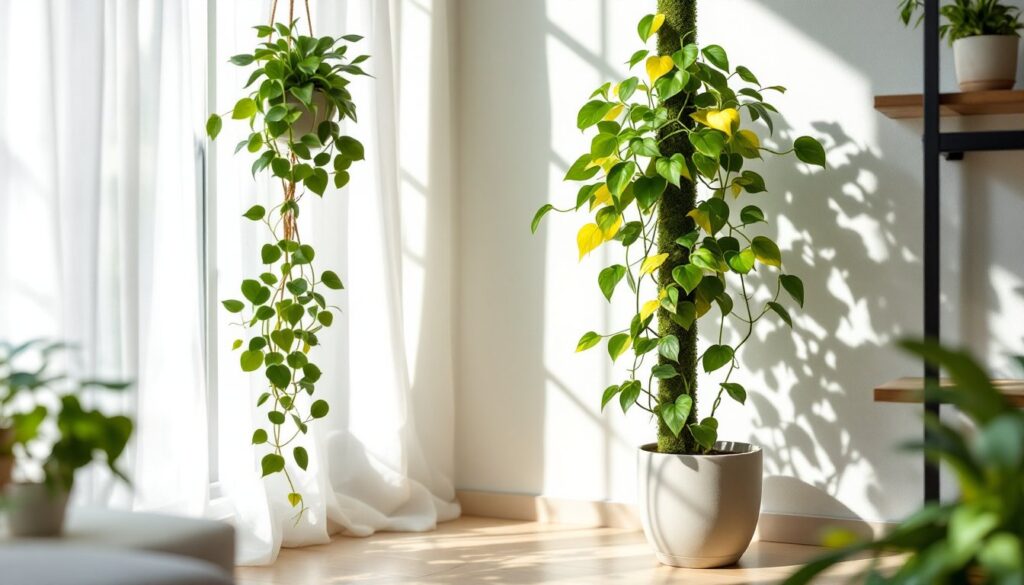
Aesthetically, climbers offer flexibility. Train them along a moss pole for a compact silhouette, or let them cascade from shelving for a relaxed jungle vibe. Unlike static arrangements, they respond to pruning and redirecting, so the design evolves with your preferences. And because most climbers propagate easily from cuttings, one plant can become five without additional expense.
Best Indoor Climbing Plants for Your Home
Low-Maintenance Varieties for Beginners
Pothos (Epipremnum aureum) is the workhorse. It tolerates low light, irregular watering, and dry indoor air without complaint. Golden pothos features yellow-splashed leaves: marble queen offers white variegation. Both climb via aerial roots or trail freely. Water when the top two inches of soil dry out, overwatering causes root rot faster than neglect.
Heartleaf Philodendron (Philodendron hederaceum) grows similarly to pothos but with smoother, darker leaves. It adapts to fluorescent office lighting or bright indirect windows. Pinch back leggy vines to encourage bushier growth. These plants appreciate humidity but won’t sulk if you skip misting.
English Ivy (Hedera helix) prefers cooler rooms (60–70°F) and consistent moisture. It’s a true climber with clinging tendrils, ideal for topiary forms or wire frames. Note: ivy can be toxic to pets, so placement matters if you have curious cats or dogs.
These beginner-friendly options propagate quickly in water, making them ideal candidates for house vine plants that multiply across your space.
Statement Climbers for Maximum Impact
Monstera deliciosa isn’t a true climber, but it’s a dramatic vertical grower when staked. Those iconic split leaves (fenestrations) develop in bright indirect light, without it, you’ll get solid juvenile foliage. Use a moss pole (coir or sphagnum wrapped around PVC pipe) so aerial roots can attach. Water when the top third of soil dries. Mature plants reach 8+ feet indoors.
String of Hearts (Ceropegia woodii) offers delicate, cascading vines with heart-shaped leaves in silver and green. It thrives in neglect: infrequent watering (every 2–3 weeks) and bright indirect light keep it compact. Pair it with trailing ivy house plants for textural contrast in hanging displays.
Hoya carnosa (Wax Plant) produces thick, waxy leaves and fragrant star-shaped blooms if given enough light (east or west windows work well). It’s a slow grower but long-lived, decades in some cases. Let soil dry completely between waterings: root rot is the main killer. Train vines around hoops or up trellises for architectural structure.
How to Support and Train Indoor Climbing Plants
Most climbers won’t ascend on their own, they need something to grab. The support system depends on the plant’s attachment method.
Aerial roots (monstera, philodendron) need textured surfaces. Moss poles work best: the roots burrow into the moist sphagnum, stabilizing the plant and providing supplemental moisture. To install, insert the pole into the pot at planting or gently work it into established soil near the central stem. Secure vines with soft plant ties or jute twine, never wire, which cuts into growth. Keep the moss damp by misting or watering from the top.
Twining vines (pothos, heartleaf philodendron) wrap around supports. Use bamboo stakes, wall-mounted hooks with fishing line, or freestanding trellises. For trellises, builders of indoor DIY supports often use ¾-inch square dowels and eye hooks to create grid patterns that blend with modern interiors. Space horizontal runs 8–12 inches apart.
Clinging tendrils (ivy, passionflower) grip wire or mesh. A simple option: stretch galvanized wire between screw eyes mounted into wall studs (pre-drill to avoid splitting). If renting, adhesive Command hooks rated for 3+ pounds work for lightweight vines but check weight limits as the plant matures.
Training technique matters. Gently weave new growth through supports weekly while stems are flexible. Don’t force, snapped vines won’t recover. For bushier plants, pinch back the growing tips every few months to encourage lateral branching. Redirect wayward vines before they harden into awkward angles.
If working with indoor tropical house plants that appreciate warmth and moisture, position supports away from cold drafts and HVAC vents.
Care Tips for Thriving Indoor Climbers
Watering: More climbers die from overwatering than underwatering. Use the finger test, stick your index finger into soil up to the second knuckle. If it’s dry at that depth, water thoroughly until it drains from the bottom. Discard runoff: don’t let pots sit in saucers of standing water. Adjust frequency seasonally: most plants need half as much water in winter when growth slows.
Light requirements: “Bright indirect light” means within 3–5 feet of an east or west window, or 5–8 feet from an unobstructed south window (in the Northern Hemisphere). North windows rarely provide enough intensity for vigorous growth. If natural light is limited, supplement with full-spectrum LED grow lights (look for 2,000–3,000 lumens for foliage plants). Position lights 12–18 inches above foliage and run them 12–14 hours daily.
Humidity: Tropical climbers (philodendron, monstera, hoya) prefer 50–60% relative humidity. Most homes sit at 30–40%, especially in winter. Group plants together to create a microclimate, or use a small humidifier. Pebble trays (gravel-filled saucers with water just below pot level) add negligible humidity but improve aesthetics. Misting is temporary and can encourage fungal issues if done excessively.
Fertilizing: Feed during active growth (spring through early fall) with a balanced liquid fertilizer diluted to half strength. Apply every 4–6 weeks. Avoid fertilizing dormant plants in winter, they can’t process nutrients and salts build up in soil, causing root burn. If leaf tips brown even though proper watering, flush pots with room-temperature water to leach excess salts.
Pruning and maintenance: Trim dead or yellowing leaves at the base with clean pruning shears (wipe blades with rubbing alcohol between cuts). Cut leggy vines back to a node (the bump where leaves emerge) to promote branching. For unique house plants with variegated foliage, remove any all-green shoots immediately, they’re more vigorous and will overtake patterned growth.
Pest watch: Spider mites (fine webbing, stippled leaves) and mealybugs (white cottony clusters) are common on stressed plants. Inspect new growth and leaf undersides monthly. Treat infestations with insecticidal soap or neem oil, repeating every 5–7 days for three weeks. Isolate affected plants to prevent spread.
Repotting: Climbers grow quickly. Repot every 1–2 years or when roots circle the drainage holes. Choose a container 2 inches wider in diameter. Use a well-draining potting mix (standard houseplant blend with added perlite or orchid bark for aeration). Don’t bury stems deeper than they were previously, rot follows.
Conclusion
Climbing plants convert neglected vertical space into living architecture without requiring advanced horticulture skills. Match plant choice to your light conditions and maintenance commitment, invest in appropriate supports early, and adjust watering seasonally. The payoff, a lush, oxygen-generating interior that evolves with minimal intervention, beats staring at blank walls.